Cash vs accrual accounting
Compare cash vs accrual accounting and see which method suits your Hong Kong business.
Published Thursday 6 August 2026
Table of contents
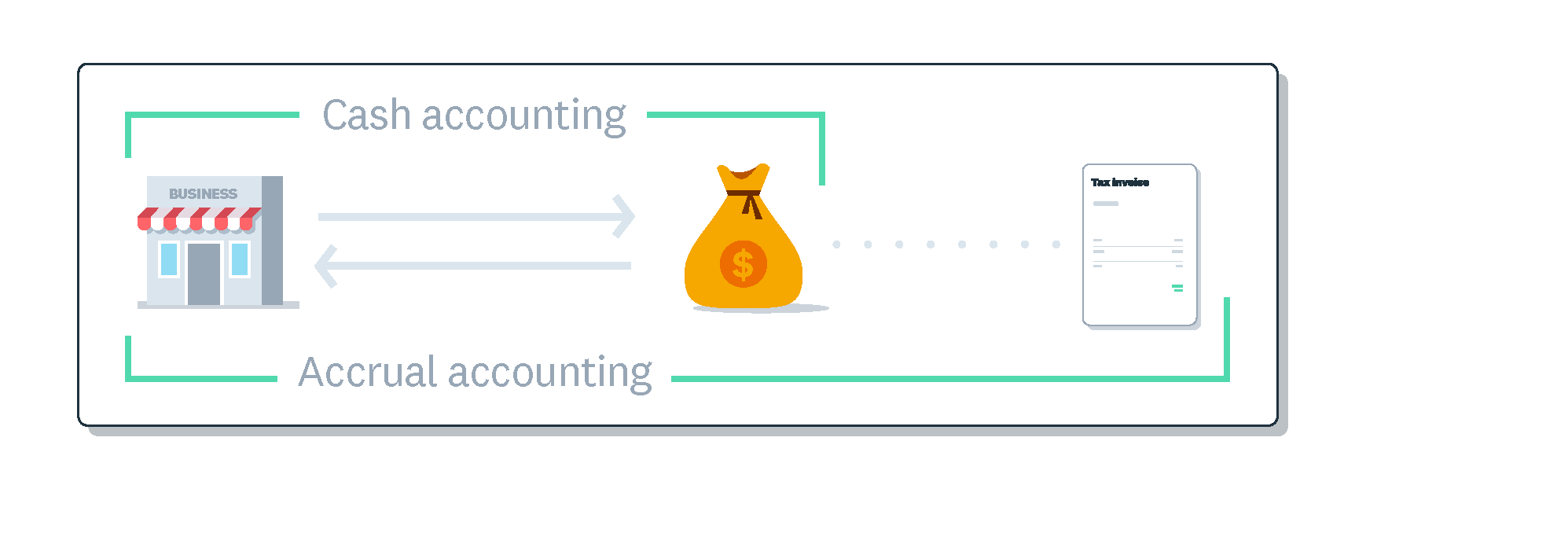
Cash accounting focuses only on cash changing hands, not outstanding bills or invoices.
Key takeaways
- Cash basis accounting records income when you receive payment and expenses when you pay them, giving you a straightforward view of cash on hand.
- Accrual accounting records income when you earn it and expenses when you incur them, providing a fuller picture of your financial position over time.
- Every Hong Kong-incorporated company must prepare accrual-based financial statements and undergo a mandatory annual audit, regardless of size or revenue.
- Unincorporated sole proprietors have more flexibility, but must still keep records for at least seven years under Section 51C of the Inland Revenue Ordinance.
What is cash basis accounting?
Cash basis accounting records income when you receive payment and records expenses when you pay them. This method focuses on actual cash movement in and out of your business, rather than when transactions are agreed or invoiced.
Because it tracks money only when it changes hands, cash basis accounting gives you a real-time snapshot of the cash available in your bank account. Many small business owners find this approach easier to manage day to day, especially if they handle their own small business bookkeeping.
Who uses cash basis accounting?
Cash basis accounting suits businesses with simple financial structures. In Hong Kong, unincorporated sole proprietors often use this method for internal cash management because it requires less record-keeping than accrual accounting.
Service-based businesses that receive payment at the time of sale, such as freelancers, consultants and small retailers with no credit terms, commonly operate on a cash basis. However, once a business incorporates, it must switch to accrual-based financial statements for its annual audit.
What is accrual accounting?
Accrual accounting records income when you earn it (usually when you issue an invoice) and records expenses when you incur them (when you receive a bill), regardless of when cash changes hands. This method matches revenue to the period in which it was generated.
Accrual accounting provides a more complete picture of profitability because it captures money you are owed and money you owe, not just cash that has already moved. If you want to understand the basics of recording transactions, starting with accrual concepts is helpful.
Who uses accrual accounting?
In Hong Kong, every incorporated company must use accrual accounting. The Hong Kong Financial Reporting Standards (HKFRS) require companies to prepare financial statements on the accrual basis for all statements except the cash flow statement. Eligible small and medium-sized entities can instead use the simplified SME-FRF and SME-FRS framework, while private companies without public accountability may use HKFRS-PE.
Businesses that carry inventory, extend credit to customers, or seek external financing also benefit from accrual accounting. The method gives banks and investors a clearer view of financial health than cash accounting can provide.
Cash vs accrual accounting: a worked example
Seeing the same transaction under both methods makes the difference concrete. Suppose you run a consulting business in Hong Kong. In March you complete a project for a client and issue an invoice for HK$40,000. The client pays in April. In the same period, you receive an HK$4,000 bill for office supplies in March and pay it in April.
Under cash basis accounting, your March records show no income and no expense, because no cash moved. In April, you record HK$40,000 income (when the payment arrives) and HK$4,000 expense (when you pay the supplier). Your March profit is HK$0; your April profit is HK$36,000.
Under accrual accounting, March is when the revenue was earned and the expense incurred, so you record HK$40,000 income and HK$4,000 expense in March. Your March profit is HK$36,000. In April, only cash moves, but profit was already recognised in the earlier period.
- Cash basis shows profit where the cash flow happens (April in this example).
- Accrual basis shows profit where the economic activity happens (March in this example).
- Over time, both methods report the same total profit, but the timing differs.
- Accrual accounting matches income with the work that generated it, making period-to-period comparisons more meaningful.
Cash vs accrual accounting: key differences
Cash and accrual accounting differ in how they time revenue and expenses, how they handle receivables and payables, and how accurately they reflect ongoing financial performance. Understanding these differences helps you choose the method that fits your Hong Kong business.
Timing of revenue and expense recognition
Cash accounting ties everything to the movement of money. You record revenue when a customer pays and expenses when you pay a supplier. Accrual accounting records revenue when you earn it (typically when you invoice) and expenses when you incur them (typically when you receive a bill). If your customers pay on 30-day terms, cash accounting delays the revenue entry by a month compared with accrual accounting.
Accounts receivable and accounts payable
Accrual accounting uses accounts receivable (money customers owe you) and accounts payable (money you owe suppliers). These accounts let you track outstanding amounts and forecast cash needs. Cash accounting has no concept of receivables or payables because it waits until cash actually moves. As a result, cash-based reports do not show money that is due to you or due from you.
Financial accuracy
Accrual accounting gives a more accurate view of profitability during any single period because it matches revenue with the work or goods delivered, and matches expenses with the period they relate to. Cash accounting can be misleading if large payments or receipts cluster in certain months. For preparing reliable financial statements, accrual is the standard approach.
Complexity
Cash accounting is simpler. Some sole proprietors even manage it with single-entry bookkeeping. Accrual accounting requires double-entry bookkeeping and more rigorous record-keeping, because each transaction affects at least two accounts (for example, revenue and accounts receivable). This added structure takes more time but supports better financial analysis.
Reporting standards in Hong Kong
Under the Hong Kong Financial Reporting Standards (HKFRS), companies must prepare financial statements on the accrual basis for every statement except the cash flow statement. Eligible small and medium-sized entities can use the simplified SME-FRF and SME-FRS framework. Private companies without public accountability may use HKFRS-PE. Hong Kong does not follow US GAAP, so references to US rules do not apply here.
Pros and cons of cash accounting
Cash accounting works well in certain situations and falls short in others. Consider these advantages and disadvantages when deciding if it suits your Hong Kong business.
Advantages:
- Easy to understand and manage without accounting training.
- Shows exactly how much cash you have on hand at any moment.
- Requires less record-keeping than accrual accounting.
- Suits simple businesses with no inventory and no credit sales.
Disadvantages:
- Does not track money owed to you or money you owe, limiting your view of true financial position.
- Can distort profit figures if large payments or receipts land in a single period.
- Not accepted for audited financial statements required of incorporated companies in Hong Kong.
- May require conversion to accrual when you seek loans or investors.
Pros and cons of accrual accounting
Accrual accounting is the standard for incorporated businesses in Hong Kong, but it has trade-offs. Here are the main benefits and drawbacks.
Advantages:
- Matches income and expenses to the period they relate to, giving a more accurate profit picture.
- Tracks accounts receivable and accounts payable, so you know what is owed and owing.
- Required under HKFRS and accepted by banks, investors and auditors.
- Enables meaningful period-to-period comparisons for growth planning.
Disadvantages:
- More complex to maintain, typically requiring double-entry bookkeeping.
- Profit on paper can look healthy even when cash is tight, so you still need to monitor cash flow.
- Takes more time or professional support to manage properly.
- Can be overkill for very small, cash-only operations.
How to choose the right accounting method in Hong Kong
Choosing between cash and accrual accounting depends on five factors: your business size and growth plans, whether you hold inventory, Hong Kong regulatory requirements, financing needs, and statutory record-keeping obligations. Each factor is covered below.
Business size and growth plans
Sole proprietors with simple finances often start with cash accounting for its simplicity. As your business grows, adds staff, or starts offering credit terms to customers, accrual accounting becomes more useful for tracking performance. If you plan to incorporate, accrual is mandatory anyway, so switching earlier can make the transition smoother.
Inventory
Businesses that buy, store or sell inventory benefit from accrual accounting. Matching the cost of goods sold to the revenue they generate gives a clearer margin analysis. Under HKFRS and the related standard HKAS 2, inventory is measured at cost or net realisable value and included in accrual-based statements. If you carry stock, review the principles of inventory accounting to ensure your records are compliant.
Hong Kong requirements: the IRD, HKFRS and the annual audit
Hong Kong businesses are administered by the Inland Revenue Department (IRD), not the US IRS, so US thresholds do not apply here. Every Hong Kong-incorporated company must prepare accrual-based financial statements and undergo a mandatory annual audit under the Companies Ordinance, regardless of size or revenue. Profits are assessed and reported through the Profits Tax Return. There is no turnover threshold in Hong Kong that forces a switch from cash to accrual; incorporation itself triggers the requirement.
Financing and investor expectations
Banks evaluating a loan application typically ask for accrual-based financial statements because they show receivables, payables and a more consistent profit pattern. Investors expect the same. If you plan to seek outside funding, using accrual accounting from the start saves the effort of restating historical figures later.
Record-keeping and statutory reporting
Section 51C of the Inland Revenue Ordinance requires every person carrying on a trade, profession or business in Hong Kong to keep sufficient records of income and expenditure to enable assessable profits to be ascertained. These records must be kept for at least seven years. Failure to comply can bring a penalty of up to HK$100,000. Whichever method you use day to day, your records must support your Profits Tax Return and, if you are incorporated, your audited accounts.
When to switch from cash to accrual accounting
Many Hong Kong businesses start with cash accounting and later move to accrual. Recognising the signs and knowing the process makes the transition less disruptive.
Signs you've outgrown cash accounting
Several triggers suggest it is time to move to accrual accounting:
- You incorporate your business, which means mandatory accrual-based, audited financial statements.
- You start carrying inventory and need to track cost of goods sold accurately.
- You extend credit terms to customers and want to monitor receivables.
- You seek a bank loan or investor capital and need statements that reflect your full financial position.
- You hire staff or contractors, and matching payroll costs to revenue periods helps you understand profitability.
How to make the switch in Hong Kong
Hong Kong has no single method-change form equivalent to the US Form 3115. To switch, you restate your opening balances onto the accrual basis and begin recording transactions under the accrual method going forward. Work with your accountant or auditor to adjust for any receivables, payables or prepayments that were not captured under cash accounting.
Keep records sufficient to satisfy Section 51C of the Inland Revenue Ordinance, and ensure your restated accounts align with HKFRS or the SME-FRF and SME-FRS framework. Once the opening balances are set, ongoing accrual accounting follows the same double-entry principles. For broader guidance on maintaining your books, see this overview of small business accounting.
Track your finances with confidence using Xero
Whether you operate on a cash basis now or have already moved to accrual, keeping accurate records is essential for meeting Hong Kong's statutory requirements and making informed decisions. Xero connects your bank feeds, automates reconciliation and generates reports that match the way you manage your business. If you are ready to simplify your bookkeeping, get one month free and see how the platform works for your Hong Kong business.
FAQs on cash vs accrual accounting
Below are common questions Hong Kong business owners ask about cash and accrual accounting.
Which accounting method is required in Hong Kong?
Every Hong Kong-incorporated company must use accrual accounting and undergo a mandatory annual audit. Unincorporated sole proprietors can use cash accounting internally but must still keep records sufficient for the IRD to assess their profits under Section 51C.
Which is better, cash or accrual accounting?
Neither method is universally better. Cash accounting suits very small, simple businesses that want real-time cash visibility. Accrual accounting suits businesses that need accurate period-by-period profit tracking, carry inventory, or seek financing.
Who uses cash basis accounting?
Freelancers, consultants and small service providers who do not extend credit often use cash accounting. In Hong Kong, this typically means unincorporated sole proprietors without inventory.
Can you switch from cash to accrual accounting?
Yes. In Hong Kong, you restate your opening balances onto the accrual basis, adjust for outstanding receivables and payables, and work with your accountant or auditor. There is no government form to file for the change itself.
What is modified cash basis accounting?
Modified cash basis is a hybrid that records most transactions on a cash basis but also tracks certain items (such as fixed assets or inventory) on an accrual basis. Hong Kong incorporated companies still need full accrual statements for their audit, so modified cash is mainly an internal management choice for some unincorporated businesses.
Do banks and investors prefer cash or accrual accounting?
Banks and investors almost always prefer accrual accounting. It shows receivables, payables and matched revenue, giving a clearer picture of financial health than cash accounting provides.
Related terms
Learn more about cash vs accrual accounting
Handy resources
Advisor directory
You can search for experts in our advisor directory
Xero Small Business Guides
Discover resources to help you do better business
Financial reporting
Keep track of your performance with accounting reports
Disclaimer
This glossary is for small business owners. The definitions are written with their requirements in mind. More detailed definitions can be found in accounting textbooks or from an accounting professional. Xero does not provide accounting, tax, business or legal advice.