How to find a dropshipping supplier for your store
The right supplier can make or break your dropshipping business. Here's how to find one you can trust.
Written by Jotika Teli—Certified Public Accountant with 24 years of experience. Read Jotika's full bio
Published Friday 27 March 2026
Table of contents
Key takeaways
- Start with a supplier directory like SaleHoo or Spocket rather than approaching manufacturers directly — directories give you access to pre-vetted suppliers and reduce the risk of committing to bulk stock before you know what sells.
- Avoid suppliers that ask for large upfront payments, refuse to send samples, or can't provide verifiable contact details — these are reliable signs of an unreliable partner that could damage your reputation with customers.
- Request samples and propose a short trial period before signing any agreement, since how a supplier handles your questions before you commit is a strong indicator of how they'll handle problems once you're live.
- Check your local rules on business registration, product restrictions, and tax obligations before you launch — getting this right early saves you from costly compliance issues as your business grows.
What are dropshipping suppliers and companies?
Dropshipping suppliers are third-party businesses that store, package, and ship products directly to your customers on your behalf. You never handle inventory yourself.
Dropshipping companies are platforms or directories that connect you to multiple suppliers and products in one place.
Here's the difference:
- Suppliers: Handle the physical product, from storage to delivery
- Companies/directories: Give you access to a library of vetted suppliers to choose from
Think of suppliers as your backstage team, managing all the behind-the-scenes work so you can focus on selling.
The dropshipping process keeps your role simple: you sell, and your supplier handles fulfilment. Here's how it works:
- Customer places an order on your online store
- You forward the order to your supplier (often automatically)
- Supplier packages and ships the product directly to your customer
- Customer receives the product with your branding
Dropshipping suppliers and companies exist all over the world. If you choose a dropshipping supplier from another country, keep in mind that it could extend the delivery time for your customers.
Companies that dropship
Most dropshippers work with a supplier directory like SaleHoo or Spocket, which connects you to vetted suppliers and product catalogues in one place.
Suppliers themselves fall into two main categories:
- Manufacturers: Make the products and sell directly to retailers. They often offer lower prices but may require bulk purchases upfront, which adds risk if you're testing a new product.
- Wholesalers: Buy products from manufacturers and resell to retailers. They stock inventory but don't make the products. Prices per unit tend to be higher, but you avoid the risk of bulk commitments.
For most new dropshippers, starting with a wholesaler or directory reduces upfront risk while you test what sells.
How to find dropshipping suppliers
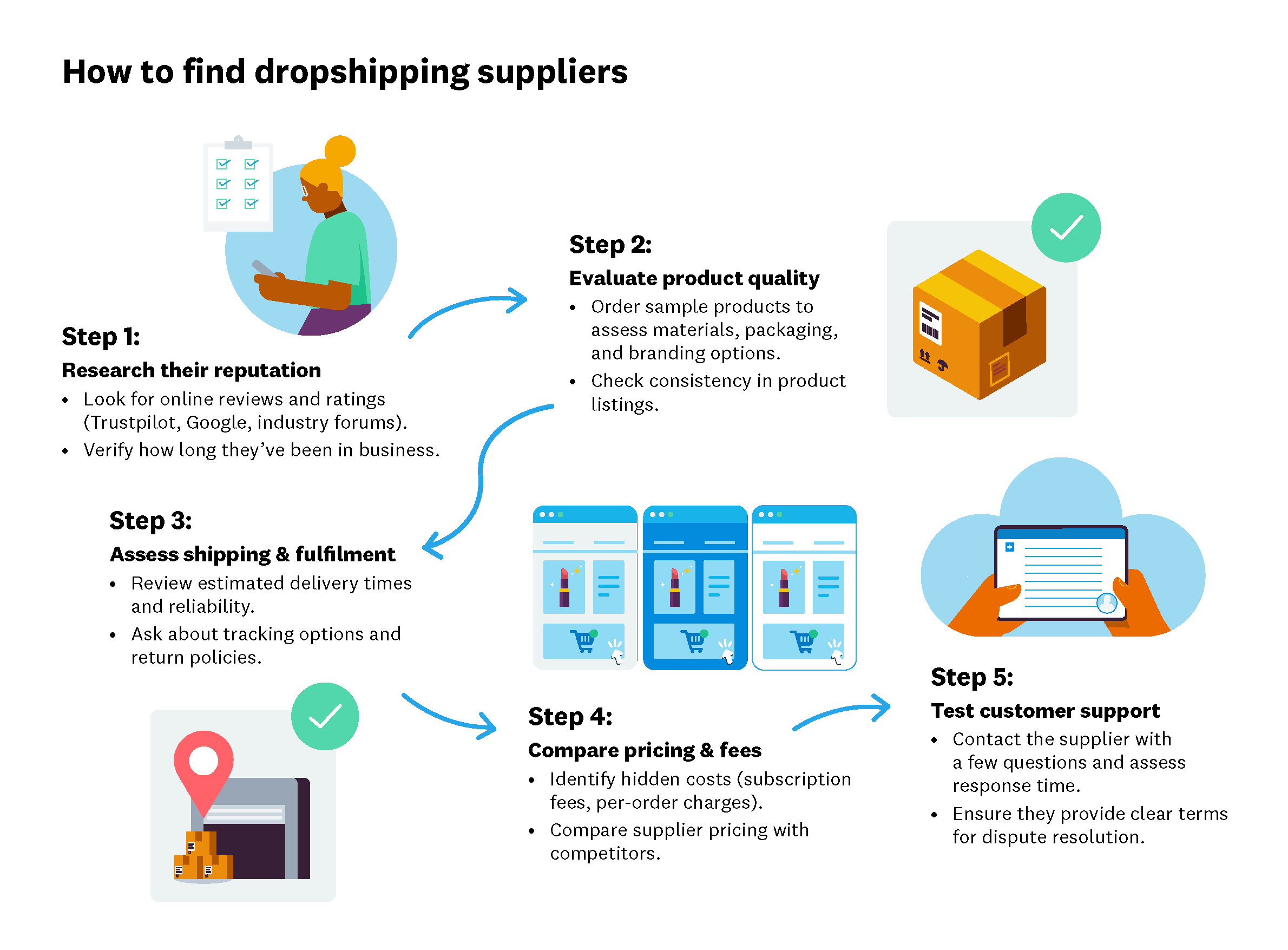
You can find dropshipping suppliers through online directories, direct outreach, marketplaces, and in-person networking. Here are the most effective methods:
- Supplier directories: Platforms like SaleHoo, Spocket, and Worldwide Brands give you access to pre-vetted suppliers in one place
- Search engines: Try terms like "wholesale dropshipping," "dropshipping suppliers," or "dropshipping suppliers [your region]"
- Social media: Search for suppliers on LinkedIn, Facebook groups, or Instagram to find niche options
- Third-party marketplaces: Browse Amazon, eBay, or Etsy for products, then research the sellers to find potential supplier relationships
- Competitor research: Order from suspected dropshippers and check the return address to identify their supplier
- Trade shows: Attend industry events to meet suppliers face-to-face and negotiate deals directly
How to evaluate dropshipping suppliers
Before committing to a supplier, take time to assess their reliability, pricing, and support. A thorough vetting process protects your business and your customers.
Signs of a reliable supplier
Look for these indicators when assessing potential suppliers:
- Transparent pricing: Clear costs with no hidden fees for orders, shipping, or returns
- Consistent shipping times: Reliable delivery windows, ideally with tracking
- Responsive communication: Quick replies to enquiries and clear escalation processes
- Positive reviews: Strong feedback from other sellers on product quality and service
- Platform integrations: Compatibility with your ecommerce platform for automated order processing
- Sample availability: Willingness to send product samples so you can check quality firsthand
- Flexible minimums: Low or no minimum order requirements for testing products
While looking for positive signs, also watch for warning signals that indicate an unreliable supplier.
Red flags to watch for
Avoid suppliers that show these warning signs:
- Large upfront payments: Legitimate suppliers rarely require significant deposits before you've placed orders
- No verifiable contact information: Missing phone numbers, addresses, or company registration details
- Unrealistic promises: Claims of guaranteed profits or impossibly low prices
- Poor or no online presence: No reviews, social profiles, or third-party mentions
- Refusal to provide samples: Unwillingness to let you test products before selling
- Pressure tactics: Urgency to sign contracts or commit immediately
- Vague terms and conditions: Unclear policies on returns, refunds, or damaged goods
Best dropshipping companies
Here's a snapshot of the best dropshipping companies, including pros, cons, and key features. Before choosing, check that your preferred supplier integrates with your ecommerce platform.
SaleHoo
SaleHoo offers two tools for dropshippers: a supplier directory with over 8,000 pre-vetted suppliers, and a Shopify integration for direct product imports.
Pros:
- Product range: Access to 2.5 million products
- Vetted suppliers: Over 8,000 pre-screened suppliers
- Import flexibility: 500 products on Basic, unlimited on Premium
Cons:
- Limited plans: Only Basic or Premium options
- No onboarding support: Basic plan lacks a dedicated account manager
- No free trial: You must commit before testing
Another popular option connects you to suppliers by location.
Spocket
Spocket connects you to a supplier directory you can filter by location. You pay a monthly subscription plus product costs, with no commission fees.
Pros:
- Sample orders: Test product quality before selling
- Platform integrations: Works with Shopify, BigCommerce, WooCommerce, and Wix
- Vetted suppliers: All suppliers are verified
- 24/7 support: Chat support included on all plans
Cons:
- Product limits: Starter plan caps you at 25 unique products
- No direct supplier contact: Spocket manages all supplier communication
If you need access to millions of products from global suppliers, consider the next option.
AliExpress
AliExpress is owned by Alibaba and offers access to over 100 million products from suppliers worldwide, primarily based in Asia.
Pros:
- No subscription fees: Pay only for products, not platform access
- Platform compatibility: Works with Shopify, WooCommerce, DSers, and more
- Low wholesale prices: Potential for higher profit margins
Cons:
- Research required: You must vet products and suppliers yourself
- Longer shipping times: Free or standard shipping from Asia can be slow
- Variable supplier quality: Check reviews and legitimacy carefully
For a one-time membership with lifetime access to verified wholesalers, you might prefer this established directory.
Worldwide Brands
Worldwide Brands is a supplier directory established in 1999, offering access to verified wholesalers and over 16 million products.
Pros:
- Verified suppliers: All suppliers are vetted for legitimacy
- Large product catalogue: Access to 16+ million wholesale products
- Lifetime membership: One-time payment, no recurring fees
Cons:
- High upfront cost: US$299 one-time fee to join
- No platform integrations: Doesn't connect directly to ecommerce platforms
- US-focused shipping: International orders may incur extra fees
Tips for contacting and negotiating with dropshipping suppliers
Building a strong supplier relationship starts with clear communication and mutual respect. Use these tips when reaching out:
- Research thoroughly: Check online reviews, product quality, and shipping times before making contact, even for directory-listed suppliers
- Communicate clearly: State your expectations, requirements, and concerns upfront so both parties understand the terms
- Stay flexible: Balance firmness on your priorities with openness to supplier capabilities and constraints
- Propose a trial period: If you're not ready for a long-term contract, suggest a short trial to test the relationship
- Consider their perspective: Acknowledge supplier profit margins and business goals before negotiating price
- Remain professional: Come prepared with business figures, and treat all suppliers respectfully regardless of outcome
Regional and legal considerations
Dropshipping is possible in most regions, but you'll need to check local requirements before starting. Here's what to consider:
- Business registration: Confirm whether you need a business licence or registration to sell online in your country
- Product restrictions: Check that your chosen products can be legally imported and sold in your region
- Tax compliance: Understand your obligations for sales tax, GST, or VAT on products sold domestically and internationally
- Supplier location: Choose suppliers closer to your customers to reduce shipping times and costs
- Import duties: Factor in customs fees for products shipped from overseas suppliers
Research your local requirements early to avoid compliance issues as you scale.
Manage your dropshipping finances with confidence
Finding the right dropshipping supplier sets the foundation for your business. Once you've partnered with reliable suppliers, you'll need to track expenses, manage cash flow, and stay on top of your margins.
If you're looking to grow your ecommerce business, learn how Xero's ecommerce accounting software can help you manage supplier payments, track profitability, and simplify your bookkeeping.
Find ecommerce apps that integrate with Xero in the Xero App Store, and get one month free to see how Xero keeps your finances organised as you scale.
FAQs on finding dropshipping suppliers
Here are answers to common questions about finding and working with dropshipping suppliers.
Is $500 enough to start dropshipping?
Yes, $500 can cover the basics: a website, a supplier directory subscription, and some initial marketing. If you plan to run paid ads or use premium tools from the start, budget more. Many dropshippers start lean and reinvest early profits to grow.
Why do so many dropshippers fail?
The most common reasons are choosing unreliable suppliers, slow shipping times that frustrate customers, and margins too thin to sustain the business. Picking suppliers carefully, testing products before listing them, and focusing on customer experience from day one makes a real difference.
Is dropshipping still viable in 2026?
Yes. Dropshipping remains a practical way to start an ecommerce business without holding inventory. Competition has increased, so success now depends more on supplier quality, niche selection, and how well you serve your customers than it did in earlier years.
Can I work with multiple suppliers at once?
Yes, and many dropshippers do. Using more than one supplier lets you expand your product range and reduces the risk of stockouts or delays from a single source. Just make sure your order management process can handle multiple fulfilment streams without creating confusion for customers.
How long does it take to find a reliable supplier?
Set aside two to four weeks to research, make contact, and test suppliers before committing. Order samples, compare pricing, and pay attention to how quickly and clearly they communicate. How a supplier handles your questions before you sign up is a good indicator of how they'll handle problems later.
Disclaimer
Xero does not provide accounting, tax, business or legal advice. This guide has been provided for information purposes only. You should consult your own professional advisors for advice directly relating to your business or before taking action in relation to any of the content provided.
Start using Xero for free
Access Xero features for 30 days, then decide which plan best suits your business.