How to start a clothing line: a step-by-step guide
Discover how to start a clothing line that sells, from brand and design to sourcing, pricing, and launch.
Written by Jotika Teli—Certified Public Accountant with 24 years of experience. Read Jotika's full bio
Published Thursday 2 April 2026
Table of contents
Key takeaways
- Validate your product idea before investing heavily by creating mockups, building a landing page to collect email signups, running pre-orders, and gathering feedback from potential customers outside your personal network.
- Start with a focused collection of three to five core pieces and choose one sales channel initially to keep costs manageable, then expand as your brand grows and proves market demand.
- Calculate your pricing using the formula: wholesale price equals materials plus labour plus overhead times two, then set retail price at wholesale price times two to 2.5 to ensure profitability.
- Plan for a realistic timeline of six to twelve months from concept to first sale, budgeting between £500 and £50,000 depending on your business model, with print-on-demand offering the lowest-risk entry point.
Why start a clothing brand?
Starting a clothing brand lets you turn creative passion into a profitable business in a growing industry. The global fashion market continues to expand, with the apparel sector projected to grow to USD 2,307.04 billion by 2034, creating opportunities for new brands to enter and thrive.
Here's what the apparel market was worth in 2023:
- United States: US$351 billion
- United Kingdom: US$82 billion
- Canada: US$39 billion
- Australia: US$21 billion
- New Zealand: US$4.5 billion
If you're ready to launch your own clothing line, the steps below will guide you from concept to first sale.
Understanding the commitment and timeline
Starting a clothing line requires significant time investment alongside financial resources. Understanding the realistic timeline helps you plan effectively and avoid burnout.
Here's what to expect at each phase:
- Research and planning: One to three months for market research, business planning, and brand development
- Design and sampling: Two to four months for creating designs, sourcing materials, and producing samples
- Production setup: One to three months for finding manufacturers, placing orders, and receiving inventory
- Website and marketing: One to two months for building your online store and preparing launch campaigns
- Launch and iteration: Ongoing adjustments based on customer feedback and sales data
Total timeline: Most clothing lines take six to twelve months from initial concept to first sale. Print-on-demand models can launch faster since they skip traditional manufacturing.
Plan for your clothing line to be a part-time commitment initially if you're working another job. Expect to spend ten to twenty hours per week during the planning phase, with more intensive periods during production and launch.
How much does it cost to start a clothing line?
Starting a clothing line typically costs between $500 and $50,000, depending on your business model and scale. Understanding where your money goes helps you budget realistically and avoid running out of funds.
Here's what to budget for:
- Design and development: $0 to $5,000 for design software, samples, and technical drawings
- Production: $500 to $20,000 for materials, manufacturing, and minimum order quantities
- Branding and website: $500 to $5,000 for logo design, photography, and ecommerce setup
- Marketing: $500 to $5,000 for initial advertising, influencer partnerships, or launch events
- Legal and admin: $200 to $2,000 for business registration, trademarks, and accounting setup
Lower-cost options include print-on-demand, which eliminates inventory investment, or starting with a small capsule collection to test demand before scaling.
Higher investments may be needed for custom manufacturing, premium materials, or retail distribution requiring extensive samples and line sheets.
Learn more about how to finance your business.
Adapt to fashion trends
Fashion trends shift seasonally, and successful clothing brands balance current styles with timeless pieces. Staying aware of trends helps you design products customers want while maintaining your brand identity.
Here's how to incorporate trends without losing your unique style:
- Sustainability: Eco-friendly materials and ethical production appeal to environmentally conscious consumers, with studies showing around 80% of global shoppers are willing to pay more for sustainable goods, which can also strengthen your supply chain.
- Customer behaviour: Pay attention to how your audience shops, such as buying summer clothes in winter for holidays abroad
- Design tools: Use AI for inspiration and efficiency, but blend it with your own creativity to avoid generic results
Build collections that mix trend-driven pieces with evergreen basics. This approach attracts new customers while giving loyal buyers reliable options.
Develop and maintain your design skills
Design skills include sketching, pattern-making, fabric selection, and using design software. Developing these abilities helps you create original products and communicate clearly with manufacturers.
You don't need a formal degree to start, but building foundational skills will strengthen your brand. Here are three common pathways.
Formal education
Many fashion programmes provide access to specialist equipment, software, and studio facilities. A diploma may help build skills and credentials, depending on the role and employer. Check out your local providers like NZ School of Art and Fashion, Australia Premier Design School, London College of Fashion, Parsons School of Design and the Fashion Institute of Design to see if applying to a formal fashion programme is the right choice for you.
Online courses and self-teaching
You don't have to go back to school. There are plenty of online courses and tutorials to give you hands-on skills to design your clothing line. To start, check out Coursera for courses on areas of fashion you're keen on.
Fashion internships
Look for internships or work experience in fashion to gain experience and to explore other specialisations – like merchandising, marketing, journalism, or styling.
No matter which direction you take, continuing to learn helps you stay informed about seasonal trends and consumer shifts.
Choose a business model and sales channels for your clothing line
Your business model defines how you'll make money, including where you sell, how you produce, and who you serve. Choosing the right model early shapes your startup costs, operations, and growth path.
Start with one sales channel to keep things manageable. As your brand grows, you can add more channels to reach new customers. Here are the most common options for clothing businesses.
Bricks-and-mortar retail store
Bricks-and-mortar retail lets customers try on and buy your clothing in person. This model works well for brands that rely on fit, fabric feel, or personalised service.
- Direct interaction: Build relationships and get immediate feedback from customers
- Instant sales: Customers leave with products the same day
- Brand showcase: Display your full range in a controlled environment
Consider the trade-offs:
- Higher overheads: Rent, utilities, and staffing add ongoing costs
- Limited reach: You depend on local foot traffic for sales
Online retail store
Online retail lets you sell clothing through your own website or marketplace platforms, a segment that is forecast to grow tremendously in the coming years. Customers browse, purchase, and receive orders by delivery without visiting a physical location.
- Global reach: Sell to customers anywhere, anytime
- Lower overheads: No rent or in-store staffing costs
- Scalability: Add products without expanding physical space
Consider the trade-offs:
- Website investment: You'll need to build and maintain an ecommerce site
- Marketing costs: Digital advertising drives traffic to your store
- Higher returns: Customers may return items that don't fit or match expectations
Pop-up shop
These are temporary retail spaces to showcase your products without committing to a physical retail store. They're great for special events, seasonal sales, or brand promotions, and are a good way to create buzz.
Pop-up shops can reduce long-term lease commitments compared with permanent retail locations and are flexible in location and timing. But this flexibility brings extra logistical challenges, as their short-term nature means you have to relocate and you have limited time to build a customer base.
Subscription box service
Subscription box services allow customers to receive regular shipments of curated items.
Subscription models can create recurring revenue, though churn and fulfilment costs affect predictability. They offer a personalised customer experience and can boost customer loyalty and retention. But you need to manage your inventory well, and customer dissatisfaction with your selections could complicate your logistics.
Wholesale
You could sell your clothing line wholesale in bulk to other retailers or businesses. Wholesale can increase order size and shift some consumer marketing to retail partners, but profit margins are lower and you depend more on partners. However, selling wholesale:
- Reduces your profit margins per unit
- Makes you dependent on retail partners
- Could put your cash flow at risk
Custom clothing
This sales strategy allows you to create and sell made-to-order items based on a customer's specifications – think personalised tees or tailored suits.
Custom clothing may support premium pricing and repeat purchases if fit, quality, and service are strong, but can involve labour-intensive production processes, higher production costs, and slower delivery times.
Create a business plan for your fashion line
A business plan documents your goals, strategy, and financial projections. It guides your decisions and helps you secure funding from investors or lenders.
Include these core sections:
- Executive summary: Summarise your business concept, target market, and financial goals in one page
- Marketing and sales plan: Define your target customers, explain how you'll reach them, and project realistic sales figures
- Financial plan: Outline startup costs, funding sources, and revenue projections for the first one to three years
- Cost breakdown: List expenses for product development, manufacturing, marketing, website, and legal fees
A clear business plan keeps you focused and shows potential partners you've done your homework. Learn more about writing a business plan.
Tailor your executive summary to any audience
Your executive summary should be a compelling overview of your company that succinctly summarises how you will start your clothing business.
Write it last, once you've nailed down the rest of your business plan – this makes it easier to write something engaging for the reader that truly encapsulates your clothing line.
You can adapt this section to the audience you're pitching to. For instance, you could present a finance-focused summary to an investor, or a product-focused summary to a supplier or manufacturer.
Xero's business plan template lets you quickly edit your executive summary and create multiple copies ready to go.
Register your clothing business
Registering your business makes your clothing line a legal entity and protects your personal assets. Requirements vary by location, but most regions require some form of registration before you start selling.
Common registration steps include:
- Choose a business structure: Decide between sole trader, partnership, or limited company based on liability protection and tax implications
- Register your business name: File with your local business registry to secure your trading name
- Obtain necessary licences: Check whether your location requires retail, home business, or sales tax permits
- Set up tax accounts: Register for sales tax collection and income tax reporting as required in your region
- Open a business bank account: Keep personal and business finances separate from day one
Consult a local accountant or business advisor to understand requirements specific to your location. Registering correctly from the start saves time and avoids compliance issues later.
Find your fashion niche and know your customers
Researching your market helps you understand who your customers are, what they want, and how to reach them. This information shapes your product designs, pricing, and marketing strategy.
Analyse your target market using these methods.
Identify your target market and their needs
Start by defining your ideal customer. Create a profile that includes:
- Demographics: Age, gender, location, income level
- Psychographics: Values, interests, lifestyle preferences
- Buying behaviour: Where they shop, how much they spend, what influences their decisions
Gather insights through surveys, focus groups, or social media polls. Look for unmet needs or frustrations that your clothing line could address.
Assess market size and growth potential
Assess the size of the fashion market and its growth trajectory. Identify areas that are set for high growth and niches that align with your clothing line.
Define your brand identity and name
Your brand name creates the first impression and shapes how customers perceive your clothing line. Choose a name that reflects your style, appeals to your target audience, and stands out from competitors.
Follow these steps to choose and secure your name:
- Brainstorm options: List names that reflect your brand values, aesthetic, or niche
- Check availability: Search trademark databases and domain registrars to confirm the name isn't taken
- Test with your audience: Share top choices with potential customers for feedback
- Secure the domain: Register your website domain before announcing your brand
- Trademark your name: File for trademark protection to prevent others from using your brand name; in the U.S., for example, basic trademark applications start at $250–$350 per class of goods.
Keep the name simple, easy to spell, and memorable. Avoid trends that may feel dated quickly.
Analyse your competitors
Analysing your competitors shows you what other brands in your niche are doing well and where they fall short. Understanding your competition helps you differentiate your products and find gaps you can fill.
Analyse your competitors in four areas.
Identify your competitors
Make a list of competitors within your fashion niche and split them into direct and indirect competitors. Include everyone from established brands to emerging designers so you have a strong grasp of the competition.
Analyse competitor offerings
Examine your competitors' products or services. Consider their pricing, the quality of the clothing line and their unique selling points, and identify their strengths and weaknesses. Think about where you would fit in this landscape.
Evaluate marketing strategies
Review your competition's marketing tactics, including their social media, influencer partnerships, and advertising campaigns.
Assess online presence
Check out your competitors' websites, ecommerce platforms and online customer reviews. Think about what works and what doesn't within the user experience, product presentation and customer engagement.
Analysing your competitors in detail helps you pick up useful tips and tricks on how to reach your audience and sell to them.
Keep an eye out for areas and trends your competitors haven't yet discovered.
Validate your product idea before investing
Validating your product tests whether customers will actually buy your clothing before you invest heavily in production. This step reduces financial risk and helps you refine your designs based on real feedback.
Here's how to validate your clothing line concept:
- Create mockups or samples: Develop a small number of prototypes to photograph and share
- Build a landing page: Set up a simple website showcasing your designs and collect email signups from interested customers
- Run pre-orders: Offer products for sale before production to gauge demand and fund your first run, a strategy that, along with physical sampling, can help avoid costly mistakes later in the process.
- Test on marketplaces: List items on Etsy or similar platforms to see how customers respond
- Gather feedback: Share designs on social media or with focus groups and ask specific questions about pricing, styles, and fit
- Analyse competitors: Check if similar products sell well, which indicates market demand
Signs your idea has potential:
- Email signups or pre-orders from people outside your personal network
- Positive feedback on specific design elements
- Customers asking when products will be available
- Comparable products selling successfully for competitors
If validation results are weak, adjust your designs, pricing, or target audience before committing to larger production runs.
Design and develop your clothing line
Developing your product turns your design concepts into finished garments ready for production and sale. This phase covers collection planning, design execution, and preparing technical specifications for manufacturers.
Here's how to develop your clothing line.
Plan your fashion line collection
Start with a focused collection of three to five core pieces. A smaller launch lets you perfect each design, manage production costs, and test customer response before expanding.
Launching online first reduces your upfront requirements. Traditional retail buyers expect extensive line sheets, multiple samples, and broad size ranges. Selling direct to customers lets you start small and grow based on demand.
Seasonal collection planning
Plan your collection to balance seasonal trends with year-round appeal.
Balance your collection with two types of products:
- Evergreen pieces: Timeless basics that sell year-round, such as classic denim, plain tees, and versatile dresses
- Seasonal pieces: Trend-driven items timed to fashion seasons and current styles
Evergreen items provide steady revenue while seasonal pieces attract attention and drive repeat purchases.
Use design programs
Professional design software helps you create and refine your clothing designs.
Design software like Photoshop and Illustrator lets you create and edit professional clothing designs.
Work with designers
Find experienced designers to help bring your vision to reality.
Create branded labels
Add professional touches to establish your brand identity.
Branded labels give your apparel a professional, unique, and handcrafted finish. This helps build your brand identity and recognition with customers.
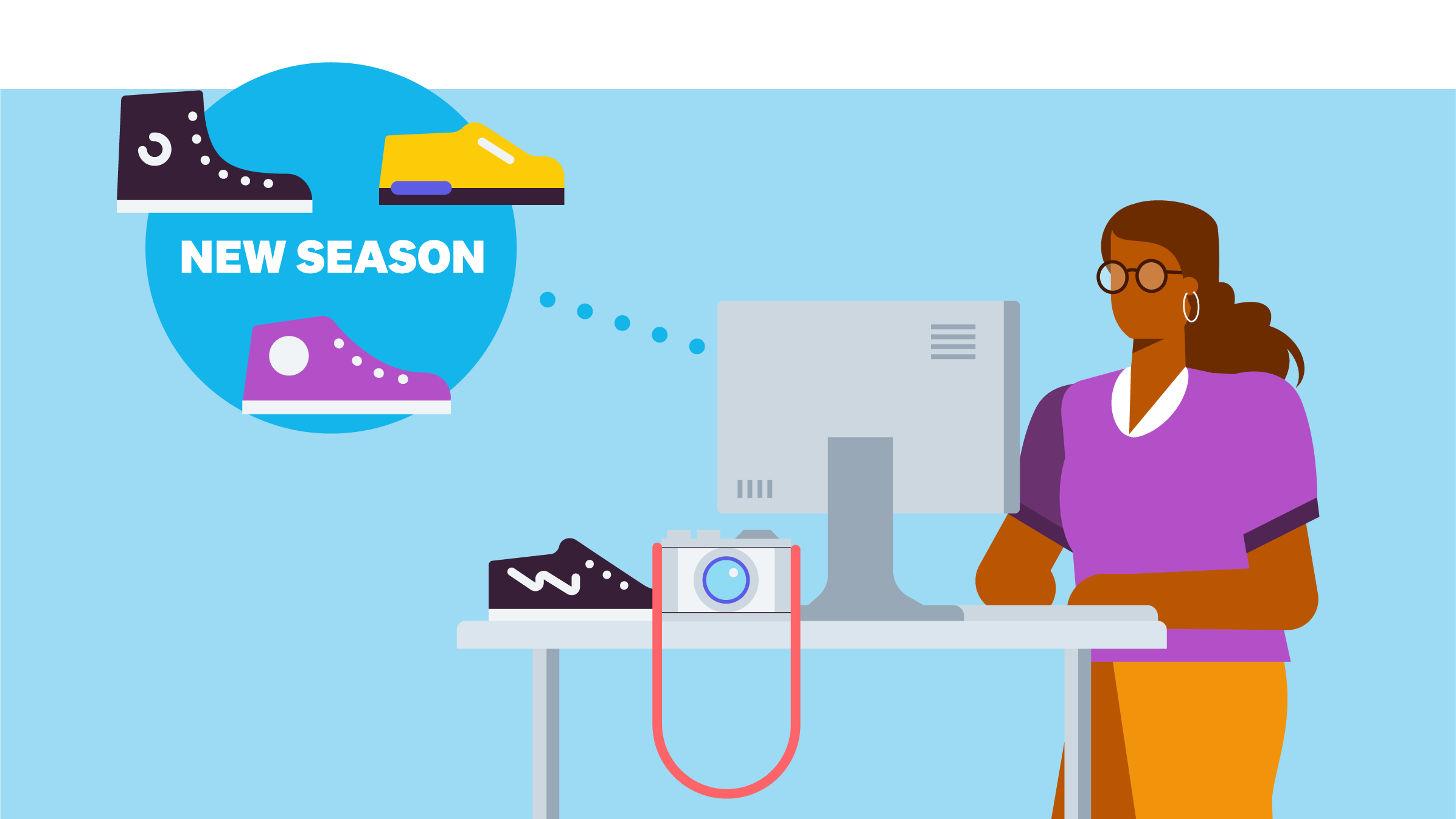
Enhance your products
Consider features that differentiate your clothing from competitors.
Enhance your clothing with features that add uniqueness and premium quality to your clothing line. For example, commercial embroidery is often produced by computerised embroidery machines using digitised stitch files and will give your items a high-quality, professional vibe.
Choose your production and manufacturing approach
Manufacturing your products is how your designs become physical products. Early on, you might produce items yourself or work with local makers. As you scale, you'll need manufacturing partners who can handle larger volumes consistently.
Compare production methods
Choose a production method that matches your design style, order volume, and budget.
- Screen printing: Produces vibrant, durable colours using thick inks. Best for bold graphics and larger orders. Offers customisation options like puff prints and water-based inks
- Embroidery: Creates textured, premium-looking designs. Works well for logos and smaller details on polo shirts, caps, and outerwear
- Print-on-demand: Prints designs as orders come in, eliminating inventory risk. This market is rapidly growing at a compound annual growth rate (CAGR) of 23.6%, and while it has lower upfront costs, it comes with higher per-unit prices.
- Direct-to-garment (DTG): Prints detailed, full-colour designs directly onto fabric. Suits complex artwork and smaller batches
Each method has trade-offs between quality, cost, and minimum order requirements. Request samples from potential suppliers before committing to a production partner.
Find and vet manufacturers
Research and evaluate potential manufacturing partners carefully.
When choosing a manufacturer:
- Request samples: Test quality before placing bulk orders
- Check minimums: Confirm minimum order quantities fit your budget and demand
- Verify capacity: Ensure they can meet your production timeline
- Review references: Ask for client references and check online reviews
Manage inventory and quality control
Balance stock levels and maintain product standards to protect your brand.
Managing your inventory balances having enough stock to meet demand without overproducing. Print-on-demand reduces inventory risk by producing items as customers order them. For bulk production, track stock levels and sales velocity to inform reorder decisions.
Managing your inventory helps you find the balance between producing enough stock and creating too much. Xero's inventory management software helps you monitor stock, track costs, and avoid stockouts.
Controlling quality protects your brand reputation. Set clear standards for materials, stitching, and finishing before production begins. Test samples for durability, colour fastness, and comfort. Inspect shipments when they arrive and address issues with your manufacturer promptly.
Use fulfilment services
Consider outsourcing logistics to focus on growing your business.
A fulfilment company can handle storage, pick-pack, packaging, and shipping on your behalf. This lets you focus on growing your clothing line rather than managing logistics.
Price your clothing line for profitability
How you price your products determines whether your clothing line makes money or loses it. Set prices too low and you'll struggle to cover costs. Set them too high and customers won't buy.
Calculate your prices using this formula:
- Wholesale price = (Materials + Labour + Overhead) x two
- Retail price = Wholesale price x two to 2.5
Here's what to include in your costs:
- Materials: Fabric, trims, labels, packaging
- Labour: Manufacturing costs per unit, including sampling
- Overhead: Design time, software, marketing, shipping supplies
- Platform fees: Payment processing and marketplace commissions
Pricing approaches to consider:
- Cost-plus pricing: Add a markup to your total costs to ensure profit on every sale
- Competitive pricing: Set prices similar to comparable brands in your niche
- Value-based pricing: Price based on perceived value and brand positioning rather than just costs
Test your pricing by checking whether similar products sell at your target price point. If competitors charge significantly less, you may need to reduce costs or differentiate on quality and brand story.
Track your profit margins as you grow. Xero's reporting tools help you monitor costs and how profitable your products are so you can adjust pricing as needed.
Build an online clothing store
An online clothing store needs an ecommerce platform, product pages, and essential business information. Setting up properly from the start creates a professional experience that builds customer trust.
Follow these steps to launch your store.
- Choose your ecommerce platform
Select a platform like Shopify, WooCommerce, or Squarespace to host your store. Consider ease of use, transaction fees, and available features. Customise your theme with brand colours, fonts, and logo to create a cohesive look.
Xero's ecommerce software integrates with Shopify to sync sales data and simplify your accounting.
- Create essential pages
Build pages that help customers trust your brand and find information:
- About us: Share your brand story and what makes you different
- Contact: Provide email, phone, or chat options for customer questions
- Shipping and returns: Set clear expectations for delivery times and return policies
- FAQs: Answer common questions about sizing, materials, and care
- Build product pages
Each product page needs high-quality images and detailed descriptions.
For photography:
- Use natural lighting to show true colours
- Capture multiple angles and close-up details
- Include model shots to demonstrate fit and movement
For descriptions:
- List materials, sizing, and care instructions
- Highlight unique features or design details
- Use keywords customers search for
Market and grow your clothing brand
Growing your clothing brand requires consistent marketing, engaging customers, and operating efficiently. Once you've launched, focus on building awareness and driving repeat purchases.
Here are proven strategies for clothing brand growth:
- Social media marketing: Share behind-the-scenes content, styling tips, and customer photos on Instagram, TikTok, or Pinterest
- Email marketing: Build a subscriber list and send new arrivals, promotions, and brand updates
- Influencer partnerships: Collaborate with creators whose audience matches your target customers
- Content marketing: Create blog posts, lookbooks, or videos that showcase your products and brand story
- Paid advertising: Run targeted ads on social platforms or Google to reach new customers
- Customer retention: Offer loyalty programmes, exclusive access, or personalised recommendations to encourage repeat purchases
Track which channels drive the most sales and focus your budget accordingly. Start with one or two strategies, measure results, and expand what works.
Use Xero to manage your clothing line finances
Running a clothing line means tracking inventory, managing cash flow, and staying on top of expenses. Xero's accounting software helps you handle the financial side so you can focus on designing and selling.
Here's how Xero supports clothing businesses:
- Inventory tracking: Monitor stock levels and costs across products and sizes
- Cash flow visibility: See money coming in and going out in real time
- Ecommerce integration: Sync sales data automatically from Shopify and other platforms
- Invoicing and payments: Send professional invoices and get paid faster
- Financial reporting: Generate profit and loss statements, balance sheets, and custom reports
'Xero just made it a seamless process. It's something that flows in and flows out through these beautiful tables and graphs and information that allow me to do what I love doing, which is creating.'
Amy Yueng, owner of 4Kinship
FAQs on starting a clothing line
Still have questions about starting your clothing line? Here are answers to common concerns.
Do I need a fashion degree to start a clothing line?
No, you don't need a fashion degree to start a clothing line. Many successful founders are self-taught or learned through online courses and hands-on experience. What matters more is understanding your target customer, developing a clear brand vision, and building skills in areas where you need them, whether that's design, marketing, or business management.
How long does it take to launch a clothing line?
Most clothing lines take three to twelve months to launch, depending on your business model and production approach. Print-on-demand brands can launch in weeks, while custom manufacturing typically requires three to six months for sampling, production, and shipping. Factor in additional time for branding, website setup, and initial marketing.
Can I start a clothing line with no money?
You can start with minimal investment using print-on-demand services, which eliminate inventory costs. Design products, list them on platforms like Printful or Printify, and pay only when customers order. This approach limits your upfront risk while you validate demand and build an audience.
Should I start with print-on-demand or custom manufacturing?
Print-on-demand suits beginners testing ideas with low risk and no minimum orders. Custom manufacturing offers better margins and quality control but requires larger upfront investment and minimum order quantities. Many brands start with print-on-demand, then transition to custom production as sales grow.
How do I protect my clothing designs?
Register your brand name and logo as trademarks to prevent others from using them. For unique design elements, consider design patents, though these are costly and time-consuming. Copyright automatically protects original artwork on your garments. Document your design process with dated sketches and files in case you need to prove ownership.
Download the guide to starting a business
Learn how to start a business, from ideation to launch. Fill out the form to receive this guide as a PDF.
Disclaimer
Xero does not provide accounting, tax, business or legal advice. This guide has been provided for information purposes only. You should consult your own professional advisors for advice directly relating to your business or before taking action in relation to any of the content provided.
Start using Xero for free
Access Xero features for 30 days, then decide which plan best suits your business.