Online business ideas and tips for getting started
Discover online business ideas you can start fast, grow on your terms, and run with less admin and more profit.

Written by Lena Hanna—Trusted CPA Guidance on Accounting and Tax. Read Lena's full bio
Published Monday 30 March 2026
Table of contents
Key takeaways
- Choose your online business model based on your skills and resources, focusing on retail if you want to sell products, services if you have expertise to offer remotely, apps if you have technical skills, or content creation if you can build an audience over time.
- Validate your business idea before investing heavily by researching competitor pricing, reading customer reviews, and testing with a small audience to confirm people will pay for your product or service.
- Focus on a specific niche market rather than competing broadly, as the internet makes it easier for customers to find specialised products and allows unusual ideas to thrive online.
- Set up proper financial systems from day one by tracking income and expenses, choosing the right business structure, and using cloud accounting software to manage invoices and monitor cash flow.
What is an online business?
An online business lets you sell products, offer services, or create content from anywhere with an internet connection. If you're ready to become your own boss or find better work-life balance, you just need the right idea to get started. Keep reading for inspiration and practical next steps.
What type of online business could you set up?
Online businesses generally fall into four main categories. Understanding these helps you choose the right model for your skills and goals.
- Retail: Selling products through an online shop or marketplace.
- Services: Providing remote expertise such as training, teaching, consulting, or managing.
- Apps and SaaS: Creating software or applications for sale or subscription.
- Content and media: Producing podcasts, videos, blogs, or other content that earns through sales, subscriptions, or advertising.
Online retail business ideas
Retail is one of the most popular ways to start an online business. According to a Xero survey of online small businesses, the most common retail categories globally include:
- Fashion and clothing: 25%
- Electronics: 21%
- Hair and beauty: 18%
- Groceries and food: 17%
- Toys, hobbies, and crafts: 17%
- Health: 17%
Source: Xero ecommerce survey, January 2021
Here are several ways to approach an online retail business:
- Make something yourself: Turn a hobby or skill into a product. Photographers can sell prints, cards, or calendars. Crafters can create niche items like pet clothing.
- Get something made: Work with contract manufacturers to customise existing products or create something new. Small batch production is often more affordable than you might expect.
- Resell products: Buy from wholesalers and add your own spin through branding or targeted marketing to stand out from competitors.
- Try dropshipping: List products in your store and have suppliers ship directly to customers. This model requires no inventory and suits those with strong marketing skills.
Learn more about dropshipping and how it works.
Online services business ideas
Online service businesses let you sell your expertise remotely without holding inventory. You can turn skills from your current job or hobbies into income.
Popular online service ideas include:
- Virtual assistant: Handling admin, scheduling, and email management for busy professionals.
- Online tutoring or coaching: Teaching skills in academics, fitness, business, or personal development.
- Freelance writing or design: Creating content, graphics, or marketing materials for clients.
- Social media management: Running accounts and creating content for businesses.
- Bookkeeping services: Managing finances for small businesses remotely, a growing field given that a McKinsey report found 86% of current accounting tasks have the potential to be automated.
Most service businesses start with one or two foundation clients and grow through referrals.
Here's how one business owner successfully transitioned to online services.
Olivia Park moved her personal training business online after relocating from Taiwan to South Korea. She agreed to work virtually with existing clients while growing her health and wellness content on social channels. This led to online group programs through Olivia Park Coaching.
"It's allowed me to create more products with different tiers of service," she says. "Some people are happy to do the online courses on their own. Others ask for customised routines. And others want one-to-one time. But the upshot is that I'm able to deliver twice as much service online as I could when limited to in-person training."
Referrals remain one of the most effective ways to grow an online service business. Building your reputation takes time, but asking satisfied clients for introductions can create steady growth.
Michael Yared built his fully online app development agency, Echobind, primarily through referrals.
"We spun off with one anchor client and built up from there," he says. "It was tough for the first couple of years because we never knew if the projects would keep coming. But we just kept asking for referrals and it's still our biggest source of new work."
Echobind eventually grew to 40 fully remote staff.
Online app and software business ideas
App and software businesses create digital tools that automate tasks for consumers or other businesses. These products can scale to millions of users, offering significant earning potential.
This model typically requires technical skills or the budget to hire developers, making it a higher barrier to entry than other online business types.
Apps generally fall into two categories:
- Consumer apps: Games, productivity tools, health trackers, entertainment, and lifestyle apps sold through app stores.
- Business apps: Software that helps companies manage operations, from tracking gym memberships to analysing farm productivity.
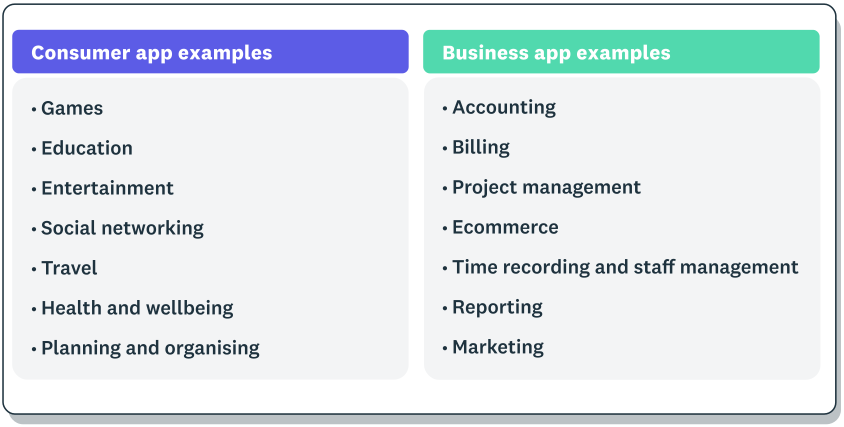
Xero accounting software integrates with over 1,000 business apps, showing the breadth of opportunities in this space. Whatever you build, marketing needs to be a core part of your plan given the competition.
Online content and media business ideas
Content and media businesses generate income by creating videos, podcasts, blogs, or other content that attracts audiences. Revenue typically comes from advertising, sponsorships, subscriptions, or affiliate marketing.
Common content business models include:
- YouTube channels: Gaming and how-to content tend to attract subscribers and sponsorship deals.
- Podcasting: Build an audience around a niche topic and monetise through ads or sponsorships.
- Blogging: Earn through display advertising, sponsored posts, or affiliate links.
- Affiliate marketing: Earn commissions when your content drives sales for other retailers.
These markets are competitive, so success depends on strong marketing, a compelling niche, and consistent content. Building a profitable audience takes time, so consider starting alongside other income while you grow.
Where to find online business ideas and inspiration
Finding a business idea often starts with research. Here are places to discover what products and services are gaining traction:
- Online marketplaces: Browse trending items on Amazon, Etsy, eBay, Google Shopping, Facebook Marketplace, and AliExpress.
- Social media platforms: Search hashtags on Instagram, Facebook, and Pinterest to explore your areas of interest.
- Crowdfunding sites: Review campaigns on Indiegogo and Kickstarter to see what ideas attract funding and how you might improve on them.
- App stores: Check top sellers and new releases to identify problems people are willing to pay to solve.
- YouTube and podcasts: Listen to what creators are discussing, selling, and recommending in your niche.
How to start an online business
Starting an online business is more accessible than most people realise. These five steps take you from idea to launch.
- Validate your business idea. Research whether people will pay for your product or service. Check competitor pricing, read customer reviews, and consider testing with a small audience before investing heavily. For service businesses transitioning online, this is especially important, as getting client buy-in can be a significant challenge.
- Choose your business structure. Decide whether to operate as a sole trader, partnership, or company. The sole trader model is a popular choice for service professionals; for instance, one survey of small accountancy practices found that 57% were sole practitioners. Each structure has different tax implications and legal requirements. Consult an accountant if you're unsure.
- Set up your accounting and financial systems. Track income and expenses from the start. Cloud accounting software like Xero helps you manage invoices, monitor cash flow, and stay organised for tax time.
- Build your online presence. Create a website or set up shop on a marketplace. Establish social media profiles where your customers spend time. Make it easy for people to find and buy from you.
- Launch and promote your business. Start selling and tell people about it. Use email, social media, and word of mouth to reach your first customers. Track what works and adjust your approach as you learn.
How to compete with big brands
Competing with big brands requires focusing on what makes your business unique rather than trying to match their prices or marketing budgets. Your authentic story and personal touch create value that large retailers cannot replicate.
Ecommerce consultant Marc McKeown of FortBrave recommends putting your story at the centre of your brand.
"Customers will gravitate to you because of your authentic story, even if they have to pay a little bit more," he says. "Continue that through into your packaging and shipping. Package products nicely and put a personal note in. Amazon can't compete with that."
That extra care might even earn your product a spot in an unboxing story on social media.
Niche down
Niching down means focusing on a specific, targeted market rather than competing broadly. The internet makes it easier for customers to find specialised products, so hyper-specific or unusual ideas can thrive online even if they wouldn't work locally.
Marc McKeown explains: "Niche shopping has been enabled by the internet. It's much easier to find out-of-the-ordinary products online than to traipse around town for it, so that's what people do."
Use Xero to manage your online business with confidence
Running an online business means managing finances from day one. You need to track expenses, send invoices, monitor cash flow, and stay on top of tax obligations, all while focusing on growth.
Xero accounting software helps online business owners:
- Track expenses: Categorise costs automatically and see where your money goes.
- Get paid faster: Send professional invoices and accept online payments.
- Monitor cash flow: See your financial position in real time with clear dashboards.
- Connect your tools: Integrate with over 1,000 apps for ecommerce, payments, and more.
You don't need accounting experience to get started. Xero is designed to be intuitive so you can focus on your business, not your books.
Ready to bring your online business idea to life? Get one month free and see how Xero makes managing your finances simple.
FAQs on online business ideas
Still have questions about starting an online business? Here are answers to common concerns.
What is the best online business to start?
The best online business depends on your skills, interests, and budget. Service businesses like virtual assistance or freelancing have low startup costs, while ecommerce requires more investment in inventory or marketing.
How much does it cost to start an online business?
Costs vary widely. A service business can start for under $100 with just a website and basic tools. Ecommerce or app businesses may require several thousand dollars for inventory, development, or advertising.
Do I need technical skills to start an online business?
No. Many online businesses require only basic computer skills. Website builders, ecommerce platforms, and accounting software like Xero are designed to be user-friendly without technical expertise.
How long does it take to make money from an online business?
Most online businesses take six to 12 months to generate consistent income. Service businesses often earn revenue faster than product businesses, which may need time to build inventory and customer awareness.
Can I start an online business while working full time?
Yes. Many successful online businesses start as side projects. Service businesses and content creation offer flexibility to work evenings and weekends until you're ready to transition full time.
Disclaimer
Xero does not provide accounting, tax, business or legal advice. This guide has been provided for information purposes only. You should consult your own professional advisors for advice directly relating to your business or before taking action in relation to any of the content provided.
Start using Xero for free
Access Xero features for 30 days, then decide which plan best suits your business.