Gearing ratio meaning: definition, formula & examples
Learn the gearing ratio meaning, how to calculate it, and use it to balance your debt and growth.

Written by Shaun Quarton—Accounting & Finance Content Writer and Growth Marketer. Read Shaun's full bio
Published Friday 20 February 2026
Table of contents
Key takeaways
- Calculate your gearing ratio using the debt-to-equity formula (Total Debt ÷ Total Equity × 100) to understand how much your business relies on borrowed money versus your own investment.
- Maintain a gearing ratio between 25% and 50% for most small businesses, as this range provides growth capital through debt while keeping financial risk manageable.
- Monitor your gearing ratio monthly or quarterly to make informed borrowing decisions and spot potential financial risks before they become serious problems.
- Consider your industry and growth stage when evaluating your ratio, as capital-intensive businesses like manufacturing may operate successfully with higher ratios than service-based companies.
Gearing ratio definition
A gearing ratio measures how much debt funds your business compared to equity. Analysts at rating agencies use this practice to break down a company's financial structure. It compares your total borrowed funds to your own investment, showing your reliance on loans versus owner capital.
Key components include:
- Debt: Borrowed money like loans and credit lines that must be repaid with interest
- Equity: Your investment in the business, including retained earnings and share capital
Why gearing ratios matter:
- Lender decisions: Lenders use them to assess your creditworthiness before approving loans
- Investor evaluation:Investors analyse them to evaluate financial risk and growth potential
- High ratios signal: More debt reliance, increasing risk but potentially boosting returns
- Low ratios signal: Stronger equity positions, reducing risk but possibly limiting growth
Why does your gearing ratio matter?
Your gearing ratio reveals your business's financial health and guides critical funding decisions. Monitoring it helps you make smarter borrowing choices and spot risks early.
Key benefits of tracking your gearing ratio:
- Borrowing decisions: Judge whether you can take on more debt without straining cash flow
- Investor appeal: Signal financial stability to potential funders with balanced ratios
- Strategic planning: Align your debt structure with growth goals for expansion or stability
- Cash flow management: Free up cash for reinvestment with lower ratios, or expect increased debt payments with higher ratios
- Risk prevention: Spot financial vulnerabilities before they become problems through regular monitoring
How to calculate the gearing ratio
Calculate your gearing ratio to understand how much your business relies on debt versus equity. Follow these steps:
- Calculate total debt: Include all loans, bonds, credit lines, and financial liabilities. Some debts can be hidden. For example, research shows over 85% of lease commitments don't appear on company balance sheets today.
- Determine total equity: Add retained earnings and share capital for total owner investment.
- Apply the formula: Choose one of these calculations:
- Interpret results:
Types of gearing ratios
Here are four main ways to measure gearing. Each ratio offers a different view of your debt and risk levels:
- Debt-to-equity ratio: Compares total debt to total equity, showing how much creditors versus owners fund your business
- Debt-to-capital ratio: Measures what percentage of total capital comes from debt rather than equity
- Equity ratio: Shows what portion of total assets you finance through equity rather than borrowing
- Times interest earned ratio: Assesses whether your pre-tax earnings can comfortably cover interest payments
The debt-to-equity ratio is the most common measure for small businesses.
Example gearing ratio calculations
These examples show how to calculate gearing ratios using the same financial data with different formulas.
Sample business figures:
- Total debt: $50,000
- Total equity: $100,000
Using the debt-to-equity formula
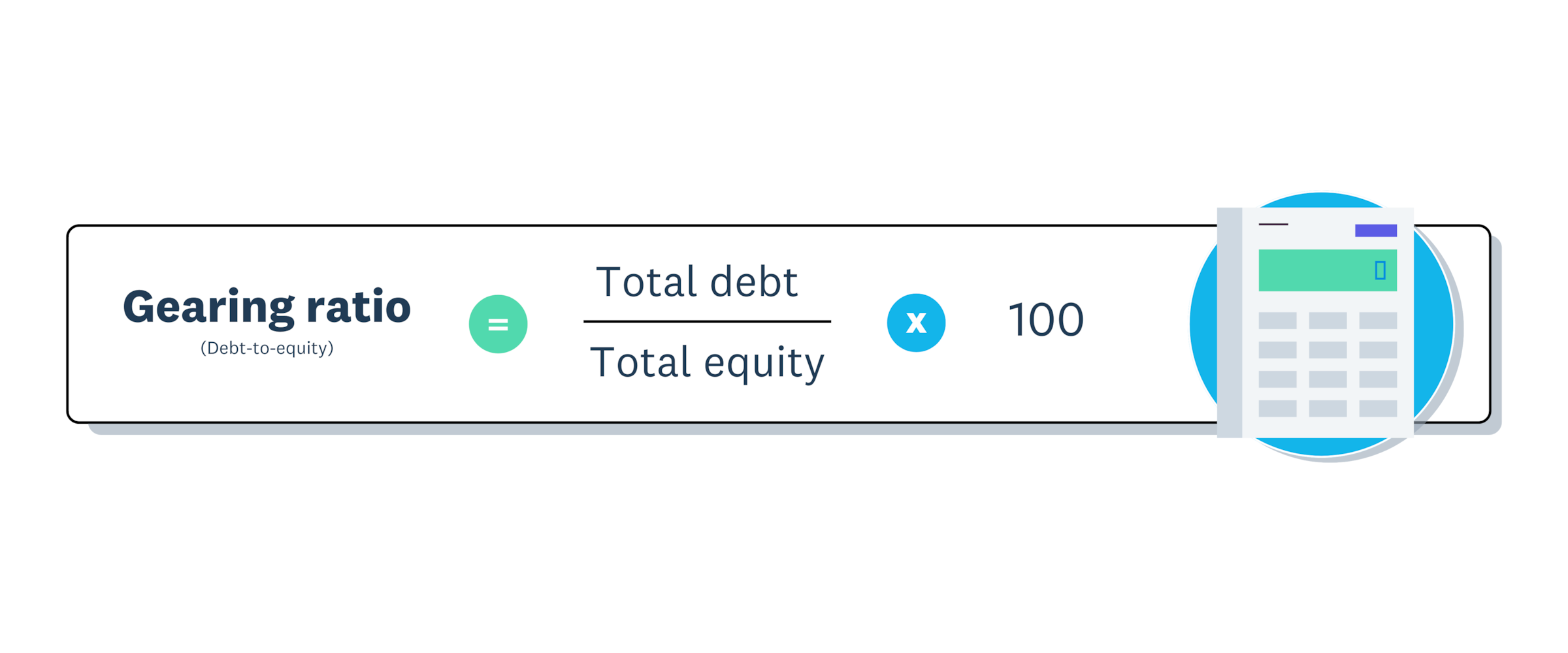
- Gearing ratio = (Total debt / Total equity) × 100
- Gearing ratio = ($50,000 / $100,000) × 100 Gearing ratio = 50%
Using the debt-to-capital formula
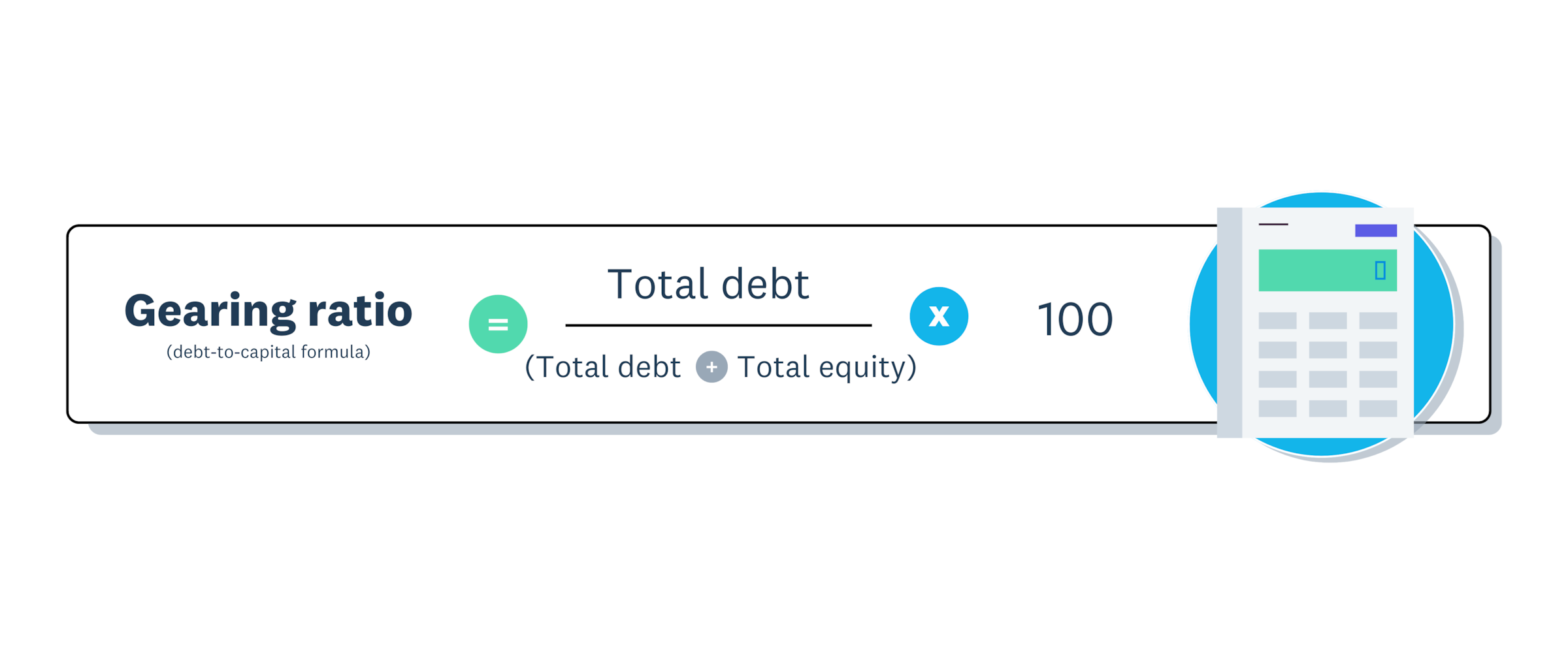
- Gearing ratio = (Total debt / (Total debt + Total equity)) × 100
- Gearing ratio = ($50,000 / ($50,000 + $100,000)) × 100
- Gearing ratio = ($50,000 / $150,000) × 100
- Gearing ratio = 33.3%
What is a good gearing ratio?
A good gearing ratio typically falls between 25% and 50% for most small businesses. However, the ideal ratio depends on your industry, business size, and growth stage.
General benchmarks:
- Below 25%: This indicates low gearing, suggesting your business relies more on equity than debt, which means lower risk but potentially slower growth
- Between 25% and 50%: Most consider this a healthy balance, showing you're using debt to fuel growth without taking on excessive risk
- Above 50%: This indicates high gearing, showing strong reliance on debt, which can increase financial risk but may accelerate growth
Ideal ratios vary by industry, as capital structures differ significantly. For example, an analysis projected that reported assets would increase by an average of 22.7% for airlines and 21.4% for retailers due to accounting changes for leases.
Capital-intensive businesses like manufacturing may operate successfully with higher ratios than service-based businesses. The best ratio for your business aligns with your financial goals and risk tolerance.
Gearing ratio analysis
Gearing ratio analysis helps you assess your business's financial health and risk level by comparing your result against standard benchmarks.
Standard gearing ratio ranges:
- Low gearing (below 30%): Strong equity position with lower risk but potentially limited growth
- Moderate gearing (30–50%): Balanced approach suitable for most small businesses
- High gearing (above 70%): Heavy debt reliance with increased risk but higher growth potential
Industry context matters. Most small businesses, which represent over 90% of the business population in developed economies, maintain 30–50% gearing ratios, using debt to fuel growth while maintaining equity for stability. Your ideal ratio depends on your industry, growth stage, and risk tolerance.
High versus low gearing: What's the difference?
High versus low gearing represents different funding strategies with distinct benefits and risks.
High gearing strategy:
- Definition: Relying more on debt than equity to fund operations
- Example: A retail store takes large loans for inventory and renovations. In a real-world Securities and Exchange Commission (SEC) filing, industrial firm Gallatin Materials LLC reported a gearing ratio of 1.36, meaning its debt was 136% of its equity.
- Benefits: Accelerates growth when sales increase and maximises expansion potential
- Risks: Vulnerable to revenue drops and interest rate increases, which can lead to major losses. For instance, in the lead-up to the 2008 financial crisis, ten large banks and securities firms recorded over $64 billion in writedowns in a single quarter.
- Best for: Businesses with stable cash flow or high-growth industries
Low gearing strategy:
- Definition: Using more equity and less debt for business funding
- Example: A family cafe expanding through saved profits rather than borrowing
- Benefits: Minimises financial risk, protects credit rating, and ensures long-term stability
- Risks: Slower growth compared to debt-funded expansion
- Best for: Businesses prioritising security or operating in unstable markets
The right balance depends on your industry, cash flow stability, and growth goals.
Manage your business finances with confidence
Smart financial management starts with understanding your gearing ratio and maintaining a healthy debt-to-equity balance.
Xero helps you monitor and manage your gearing ratio through:
- Automated calculations: Track debt and equity changes in real time
- Financial reporting:Generate balance sheets and financial statements instantly
- Cash flow visibility: Monitor how debt payments impact your available funds
- Shareable reports: Give lenders and investors clear, professional financial reports when they need them
Ready to take control of your business finances? Get one month free and see how Xero simplifies financial management for growing businesses.
FAQs on gearing ratios
Here are answers to common questions about gearing ratios and their impact on your business.
What is the best gearing ratio for small businesses?
A gearing ratio between 30–50% works well for most small businesses. This range provides growth capital through debt while maintaining a stable equity base.
Is a high or low gearing ratio better?
Both have their place depending on your situation. High gearing accelerates growth but increases risk, while low gearing provides stability but may limit expansion opportunities. The right choice depends on your goals and risk tolerance.
What does a gearing ratio of 50% mean?
A 50% gearing ratio (also expressed as 0.5) means your business has $1 of debt for every $2 of equity, or that debt makes up one-third of your total capital. This is generally considered moderate and healthy for most small and medium-sized businesses with stable cash flows.
What happens if my gearing ratio is too high?
A high gearing ratio (above 70%) increases your financial risk. You may face higher interest payments, difficulty securing additional loans, and vulnerability to revenue drops. To reduce your ratio, focus on paying down debt or increasing equity through retained earnings or additional investment.
How often should I monitor my gearing ratio?
As part of ongoing financial oversight, a key component of services like risk management and internal control, you should check your gearing ratio monthly or quarterly. Monitor it more frequently before major financial decisions like loan applications, investor pitches, or expansion plans.
Can I improve my gearing ratio quickly?
You can improve your ratio by paying down debt or increasing equity through retained earnings or additional investment. For example, following the 2008 financial crisis, US banks and securities firms reduced their reliance on debt by raising more than $200 billion in new capital.
Start using Xero for free
Access Xero features for 30 days, then decide which plan best suits your business.