General ledger (GL)
Learn what a general ledger is, what it records, and how it keeps your books balanced and report-ready.
Published Monday 31 August 2026
Table of contents
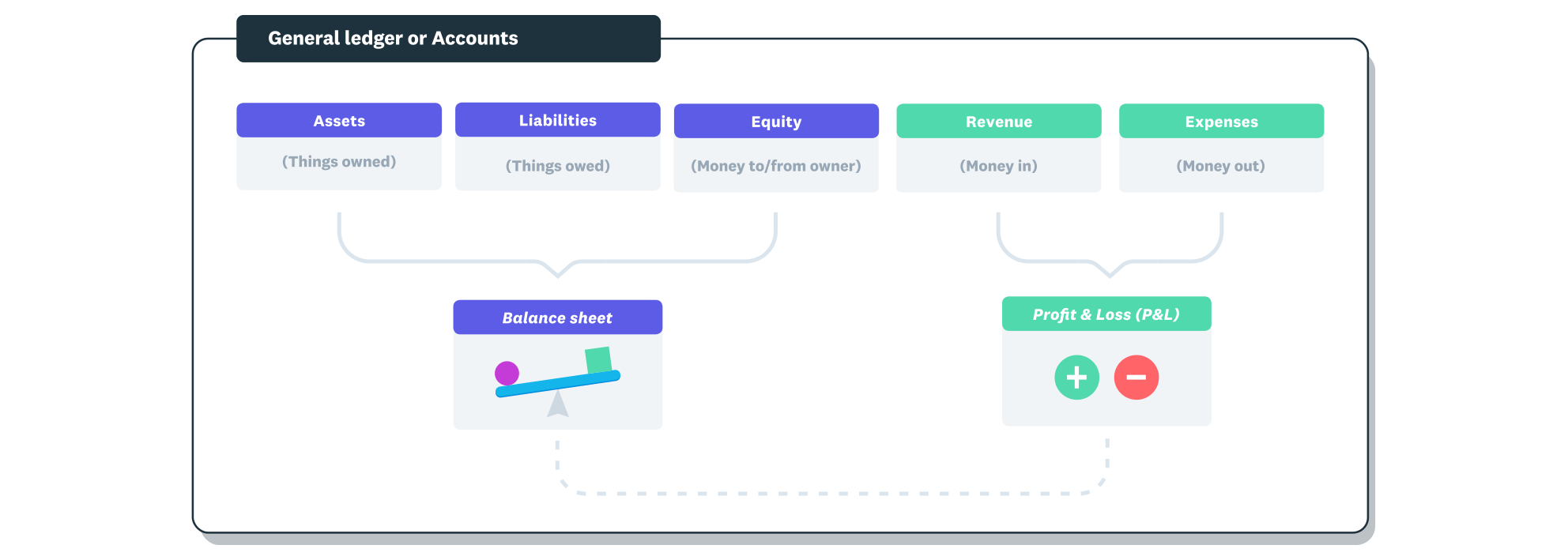
Transactions are entered into the correct account in order to produce the financial reports.
Key takeaways
- A general ledger is the master record of all your business's financial transactions, organised into five account types: assets, liabilities, equity, revenue, and expenses
- Every entry follows double-entry bookkeeping, so total debits always equal total credits and your books stay balanced
- The ledger feeds your trial balance and financial statements, which makes tax, audits, and reporting faster and more accurate
- Accounting software keeps your general ledger updated automatically as you reconcile, reducing manual data entry
What is a general ledger?
A general ledger is the master record of all your business's financial transactions, organised by account. It is sometimes called the GL, and it brings together every debit and credit so you can see the full picture of your finances in one place.
Think of it as the central book your business builds every report from. Each account, whether it is your bank balance or your rent expense, has its own place in the ledger. For a deeper technical breakdown, the Corporate Finance Institute's guide to the general ledger is a useful reference.
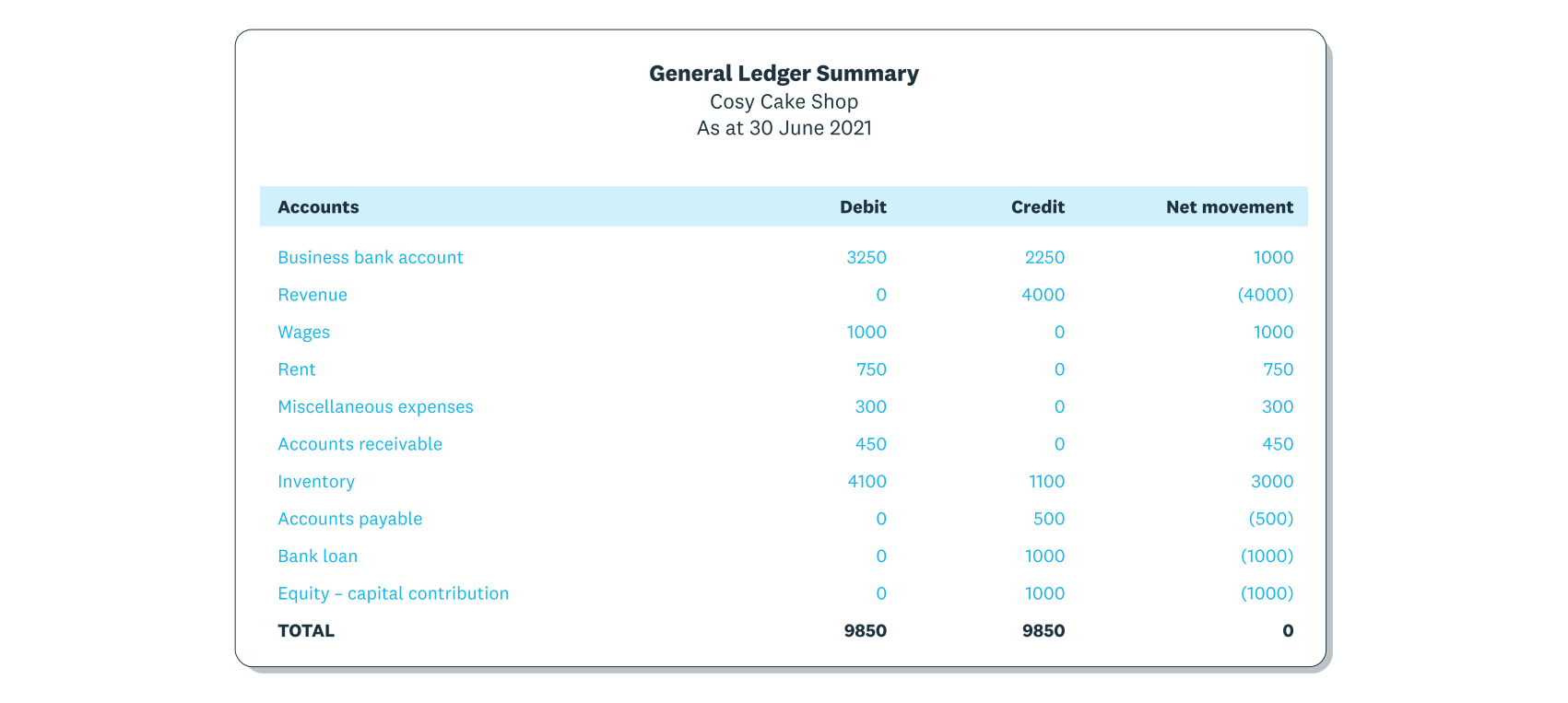
The general ledger summarises the credit and debit transactions for each account.
What is recorded in a general ledger
A general ledger records every transaction across five account types. Each type groups similar activity together, so your numbers stay easy to follow.
- Assets: what your business owns, such as cash, equipment, and money owed to you by customers
- Liabilities: what your business owes, such as loans, unpaid bills, and taxes due
- Equity: the owner's stake in the business after liabilities are subtracted from assets
- Revenue: the income you earn from selling goods or services
- Expenses: the costs of running your business, such as rent, wages, and supplies
How a general ledger works
A general ledger works by moving each transaction through a clear sequence. It starts life as a record and ends up in your financial statements.
First, a transaction is recorded as a journal entry that captures the date, accounts, and amounts involved. That entry is then posted to the general ledger, where it updates the relevant account. When you finish logging your accounting transactions, the ledger balances are summarised in a trial balance and used to produce your financial statements.
General ledger and double-entry bookkeeping
The general ledger is built on double-entry bookkeeping, where every transaction affects at least two accounts. One account is debited and another is credited, so total debits always equal total credits.
This balance reflects the accounting equation: Assets = Liabilities + Equity. When your debits and credits match, your books stay in balance and your ledger stays trustworthy.
Types of general ledger accounts
Larger businesses often split their records into three ledgers that feed into the main one. Each ledger tracks a different part of your activity before rolling up into the general ledger.
- Sales or debtors ledger: tracks money owed to you by customers
- Purchases or creditors ledger: tracks money you owe to suppliers
- General ledger: brings everything together as the master record for the business
Whichever ledgers you keep, they all roll up into the same five account categories: assets, liabilities, equity, revenue, and expenses.
General ledger example
A short example shows how the general ledger summarises the debit and credit side of each account. Say you buy office supplies for cash.
Your supplies expense account is debited for the amount spent, because your expenses go up. At the same time, your cash account is credited for the same amount, because your cash goes down. Both entries sit in the ledger, keeping your debits and credits equal.
General ledger vs general journal
The general journal and the general ledger do two different jobs. The general journal is the chronological log where you record transactions in the order they happen.
The general ledger then organises those same transactions by account, so you can see the running balance for each one. From there, you can prepare a trial balance to check that your books add up before you report on them.
Why use a general ledger?
A general ledger gives you a single, reliable source for your numbers. That makes several everyday tasks faster and more accurate.
- Prepare accurate financial statements from one organised source
- Make audits easier by keeping a clear trail of every transaction
- Simplify tax filing with figures that are ready to report
- Spot unusual transactions before they become bigger problems
- Judge the financial health of your business at a glance
Keep your general ledger accurate with Xero
Xero's accounting software keeps your general ledger updated automatically as you reconcile your bank transactions, so your account balances stay current without manual data entry. You can get one month free to see how a well-organised ledger keeps your finances clear and ready to report.
FAQs on general ledgers
Here are quick answers to common questions about how a general ledger works and what it does for your business.
What is a general ledger in simple terms?
A general ledger is the central record that stores every financial transaction your business makes, sorted by account. It is where you go to check the balance of any account at any time.
What is general ledger accounting?
General ledger accounting is the practice of posting transactions to the correct accounts and keeping debits and credits balanced. It gives you an accurate base for every report you produce.
What is a general ledger used for?
A general ledger is used to track account balances, prepare financial statements, and support tax and audit work. It also helps you catch errors and unusual entries early.
What are the three types of general ledger accounts?
The three ledger types are the sales or debtors ledger, the purchases or creditors ledger, and the general ledger itself. The first two track customer and supplier activity, then feed into the master general ledger.
What is the difference between a general ledger and a general journal?
The general journal lists transactions in date order as they occur, while the general ledger sorts those transactions by account. You record first in the journal, then post to the ledger.
Related terms
Learn more about general ledgers
Handy resources
Advisor directory
You can search for experts in our advisor directory
Xero Small Business Guides
Discover resources to help you do better business
Online accounting with Xero
Automate your accounting in the cloud
Disclaimer
This glossary is for small business owners. The definitions are written with their requirements in mind. More detailed definitions can be found in accounting textbooks or from an accounting professional. Xero does not provide accounting, tax, business or legal advice.