What is dropshipping? How it works and how to start
Learn how dropshipping helps you launch fast, cut costs, and sell without holding stock.
Written by Lena Hanna—Trusted CPA Guidance on Accounting and Tax. Read Lena's full bio
Published Thursday 2 April 2026
Table of contents
Key takeaways
- Choose reliable suppliers who offer white-labelling, automated integration, and clear terms for pricing and returns, as your reputation depends entirely on their product quality and shipping performance.
- Set your prices carefully by factoring in profit margins, competitive positioning, and hidden costs like platform fees to ensure you maintain healthy margins while staying competitive.
- Focus on specific market niches with unique or hard-to-find products rather than competing on common items, as this helps you stand out in a crowded marketplace with low barriers to entry.
- Maintain excellent customer service and clear communication since customers hold you accountable for all aspects of their order, even when issues originate with your supplier.
What is dropshipping?
Dropshipping is a sales method where an online store sells products without holding stock. When a customer orders through your website, your store forwards the order to the supplier, who ships the product directly to your customer.
You don't handle inventory or shipping logistics; that's the supplier's job. This frees you to focus on running your online store, marketing, and processing orders.
The global dropshipping market was valued at USD 365.67 billion in 2024 and is projected to reach USD 1,253.79 billion by 2030. While startup costs are low and it's easy to get started, success requires strategic positioning and careful margin management.
How does dropshipping work?
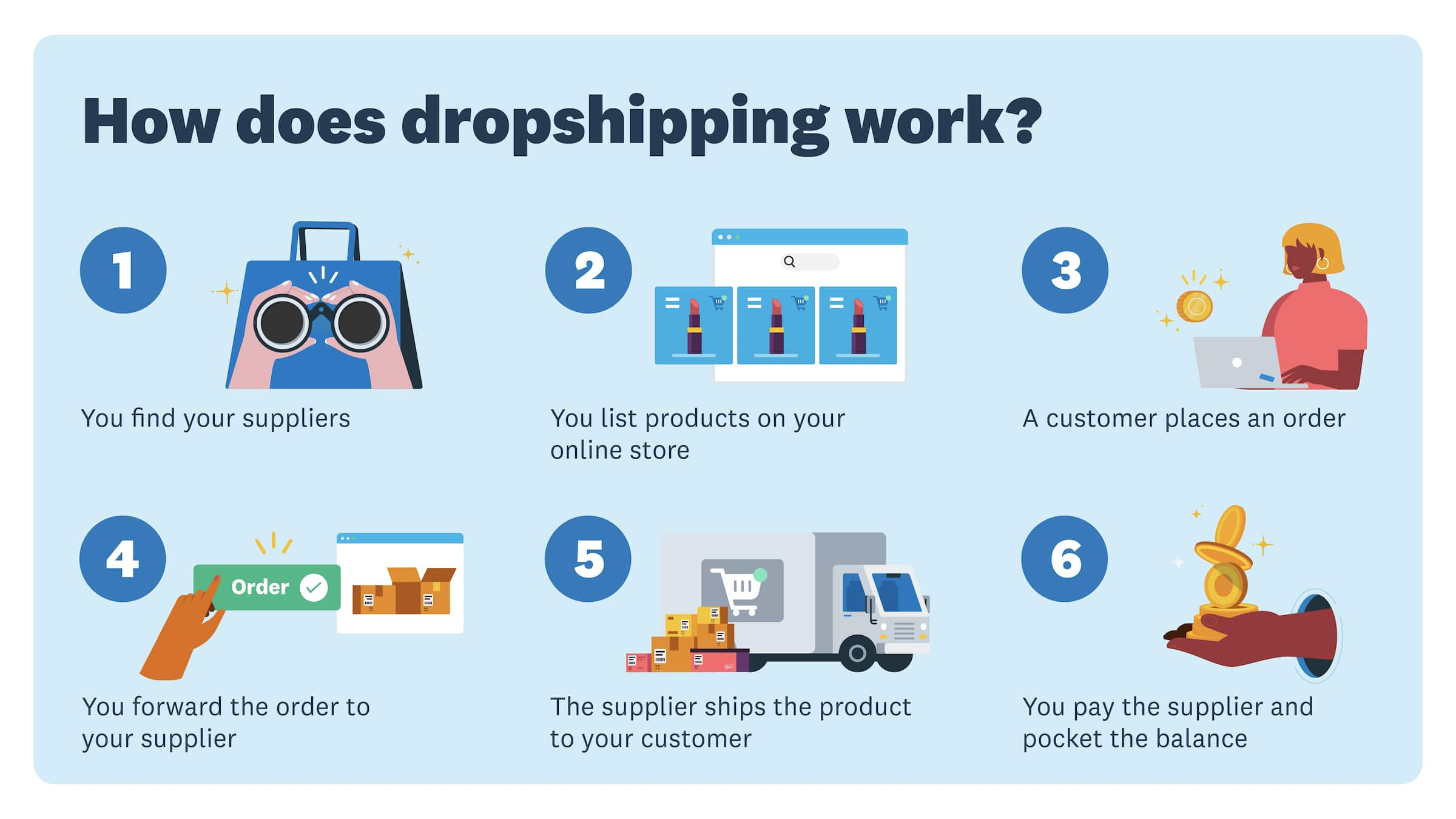
1. You find your suppliers
Not all suppliers work with dropshippers. Once you find one, check for quality products, competitive prices, and reliable shipping.
Establish clear terms upfront for pricing, return policies, and restocking fees. The clearer the terms, the fewer misunderstandings later.
Look for suppliers that offer:
- White-labelling: they add your branding to products and packaging so customers see your store, not the supplier
- Automated integration: dedicated dashboards, store connections, or partner-specific systems that streamline ordering
2. You list products on your online store
Add products to your store with detailed descriptions, high-quality images, and accurate specs. Your supplier may provide these, or you can create your own branded versions.
Set prices carefully by factoring in:
- Profit margins: add a markup that covers your costs and leaves room for profit
- Competitive positioning: customers compare prices online in seconds
- Hidden costs: account for platform fees and transaction charges in your final price
3. A customer places an order
When a customer orders something, the payment is made directly to you, the dropshipper.
You're now in charge of the transaction, so it's your responsibility to manage refunds and resolve disputes.
4. You forward the order to your supplier
Send the order details to your supplier, including the customer's address, product specifications (size, colour, and so on), and any special requests.
5. The supplier ships the product to your customer
The supplier packages and ships the product directly to your customer.
6. You pay the supplier and pocket the balance
Pay the supplier the agreed wholesale cost and any shipping fees. The difference between what the customer paid and your costs is your profit.
Dropshipping business models
There are several dropshipping business models, each with pros and cons depending on your goals.
- Wholesale dropshipping: partner with wholesalers who source and ship products to your customers. Test different items with minimal risk since wholesalers stock wide product ranges.
- Print-on-demand dropshipping: produce items only after a customer orders. This works well for custom-designed products like T-shirts, mugs, and phone cases. You can test designs without investing in big print runs, though shipping times may be longer.
- Retail dropshipping: source products from retailers like Amazon and ship them to customers. This gives you access to a huge range of readily available products, but buying at retail prices squeezes profits. Products arrive in the retailer's original packaging. Still, it's useful for testing product demand or exploiting price arbitrage.
Dropshipping vs traditional retail
There are three main differences between dropshipping and traditional retail:
- Inventory management: dropshippers outsource stock storage to suppliers, while traditional retailers manage and store inventory themselves
- Initial investment: dropshippers start with minimal capital requirements, while traditional retailers invest in inventory and storage upfront
- Operational risks: dropshippers transfer inventory risk to suppliers and focus on customer relationships, while traditional retailers manage inventory directly and handle storage security
Some products work better with dropshipping than traditional retail. Here are examples:
- Niche products: test new or specialised items like eco-friendly cleaning supplies or vegan skincare without committing to large stock orders
- High-value items: sell expensive products like designer bags or luxury watches while suppliers handle inventory, storage, and insurance
- Trendy or seasonal items: offer fashion accessories, heated blankets, or Christmas ornaments with flexible inventory that matches demand. The fashion segment is particularly popular, accounting for the largest revenue share of the dropshipping market in 2024.
Is dropshipping legal?
Yes, dropshipping is legal in most countries, including the United Kingdom (UK), United States (US), European Union (EU), and Australia. However, you must comply with standard business regulations.
Key compliance areas include:
- Business registration: register your business and obtain any required licences for your location
- Tax obligations: collect and remit sales tax or VAT where required, and report income accurately
- Consumer protection: follow local consumer rights laws for returns, refunds, and product descriptions
- Intellectual property: only sell products you're authorised to sell and avoid counterfeit goods
- Platform rules: follow marketplace policies if selling on Amazon, eBay, or similar platforms
Staying compliant protects your business and builds customer trust. If you're unsure about specific requirements, consult a local accountant or legal advisor.
Dropshipping pros and cons
Before starting a dropshipping business, weigh the benefits against the drawbacks to decide if it's right for you.
Dropshipping benefits
Here are the main benefits of dropshipping:
- Scalability: outsourcing inventory and logistics to suppliers frees you to focus on expanding your product range, marketing, and customer service
- Location flexibility: with no physical storefront or warehouse, you can run your business from anywhere with an internet connection
- Lower startup costs: you pay suppliers only after making a sale, eliminating large upfront inventory investments and reducing financial risk
- Reduced overheads: without storing or handling goods, you avoid warehousing and related costs, helping your business become profitable faster
- Improved cash flow: paying suppliers after receiving customer payments means you're not tying up funds in inventory
- Lower environmental impact: less waste from unsold stock and fewer transportation steps make dropshipping a more sustainable option
Dropshipping drawbacks
Dropshipping isn't a perfect business model. Here are the main drawbacks:
- Complex shipping: working with multiple suppliers requires clear communication about delivery timeframes, and customers may receive items from the same order in separate shipments
- International considerations: cross-border orders require planning for customs processing times and import fees to maintain customer satisfaction
- Lower profit margins: individual item purchases come at retail pricing, and some suppliers apply fees for small orders. For many stores, this results in typical net profit margins of between 10% and 20%, requiring careful allocation of marketing and growth budgets.
- Intense competition: low barriers to entry attract many sellers, making differentiation and value-added services essential for success
- Supplier dependence: customers hold you accountable for product quality, shipping times, communication, and packaging, even when issues originate with the supplier, making supplier selection critical
- Branding limitations: white-labelling availability varies by supplier, so customers may receive orders in supplier packaging rather than your branded materials
How to start dropshipping
Starting a dropshipping business is straightforward but takes careful planning. Follow our guide to dropshipping to get started.
1. Find your market niche
Choose a market segment that matches your interests and meets demand. Use tools like Google Trends to spot growing trends, and search platforms like Amazon or eBay for in-demand products. Selling unique, hard-to-find items helps you stand out.
Learn how to do market research for your business.
2. Choose reliable suppliers
Look for suppliers with the right location, reputation, prices, and fees. Check their minimum order requirements, packaging quality, and dispatch times.
Platforms like Spocket, Modalyst, and DSers connect your store with proven suppliers. They let you:
- browse supplier catalogues
- import products with auto-filled descriptions and images
- customise product details to fit your brand voice
3. Create your online store
Build a user-friendly store where customers can browse and purchase products:
- choose a platform like WooCommerce, Shopify, BigCommerce, or Wix
- pick a payment processor such as Stripe or PayPal
- add products with detailed descriptions, clear images, and accurate specs
- incorporate your branding into the site's design for a cohesive look
4. Plan your marketing strategy
Effective marketing grows your dropshipping business. Focus on these areas:
- Social media: choose platforms that align with your audience and post regularly to showcase products and create tutorials
- Digital advertising: run pay-per-click (PPC) campaigns on Google, Facebook, and Instagram to reach your ideal customer
- Customer reviews: offer small discounts for reviews and display positive feedback on your website to build trust
Top five tips for dropshipping success
Dropshipping lets you adapt quickly, but success takes creativity and attention to detail. Here are five tips to help your startup succeed.
- Know your customer: earn loyalty by catering to specific needs and aim to be the store customers think of first when they need products in your area
- Be trustworthy and responsive: answer enquiries promptly, maintain clear return policies, and handle complaints professionally to build repeat business
- Choose suppliers that deliver quality: request samples, monitor customer feedback, and ensure suppliers resolve issues quickly since suppliers manage product quality on your behalf
- Stay organised: keep accurate financial records, manage cash flow, and stay on top of taxes to keep operations running smoothly
- Be passionate: enthusiasm keeps you motivated through challenges and customers appreciate a store owner who genuinely cares about their products
Streamline your dropshipping business with Xero
With Xero accounting software, you can handle the financial side of your dropshipping business more easily. Key features include:
- Ecommerce integration: connect with platforms like Shopify and WooCommerce
- Real-time cash flow forecasting: see your financial position at a glance
- Multi-currency support: manage international sales without complications
When you're ready to grow, explore more tools in the Xero App Store. Get one month free and see how Xero can simplify your dropshipping finances.
FAQs on dropshipping
Here are answers to common questions about starting and running a dropshipping business.
Can I start dropshipping with minimal investment?
You'll need some initial funds for essentials like a domain name, web hosting, and marketing, though startup costs are low.
How much do dropshippers make?
Earnings vary widely based on experience. For example, most beginners earn $0–$2,000 per month, while intermediate sellers can make $2,000–$10,000 and advanced sellers may reach $50,000 or more per month. Your income ultimately depends on your market niche, demand, profit margins, and competition.
What is the best dropshipping platform?
The best platform depends on your business needs. Popular options include:
- Spocket: connects you with US and European suppliers offering fast shipping, with typical delivery times ranging from three to seven days.
- Modalyst: offers a wide range of products including unique brands and print-on-demand options
- DSers: partners with AliExpress for low-price suppliers and bulk orders
Is dropshipping legal?
Yes, dropshipping is legal in most countries. You'll need to comply with business registration, tax, and consumer protection requirements. See the full section on dropshipping legality above.
What challenges do dropshippers face?
Success requires choosing reliable suppliers, budgeting adequately for marketing, setting realistic profit expectations, and providing excellent customer service. Success requires careful planning, realistic budgets, and a focus on customer experience. For example, beginners often need to spend five to ten hours daily learning the business and testing products to get established.
Disclaimer
Xero does not provide accounting, tax, business or legal advice. This guide has been provided for information purposes only. You should consult your own professional advisors for advice directly relating to your business or before taking action in relation to any of the content provided.
Start using Xero for free
Access Xero features for 30 days, then decide which plan best suits your business.