How to measure profitability
Learn how to measure and improve profitability in your small business with key formulas and practical tips.

Published Friday 5 June 2026
Table of contents
Key takeaways
- Profitability shows what percentage of revenue you keep as profit after covering your costs.
- Gross, operating, and net profit margins each reveal profitability at a different cost stage.
- Regular profitability tracking helps you spot trends, adjust pricing, and make confident decisions.
- Accounting software automates the calculations so you can focus on growing your business.
What profitability means in small business
Profitability measures how effectively your business turns revenue into profit. It's expressed as a percentage. It shows how much of each ringgit in sales you get to keep after covering your costs.
High profitability means a larger share of your revenue stays in the business as profit. Low profitability means most of your revenue goes towards covering expenses. This could signal that costs are too high or pricing needs adjusting.
Understanding your profitability helps you make smarter decisions about pricing, spending, and where to focus your efforts. According to the SME Corporation Malaysia, financial literacy is one of the key factors in small business sustainability.
Profit vs profitability
Profit and profitability are related but different. Profit is a fixed amount; it's the money left over after you've paid your expenses. Profitability is a ratio showing what percentage of revenue becomes profit.
This distinction matters. A business could earn a large profit but still have low profitability. This happens when costs are nearly as high as revenue. You want both strong profit and healthy profitability to build a sustainable business.
Profitability metrics
The three most common profitability ratios are gross profit margin, operating profit margin, and net profit margin. Each one measures profitability at a different stage of your business's cost structure.
Gross profit margin
Gross profit margin measures the percentage of revenue remaining after you subtract your cost of goods sold (COGS). COGS includes direct costs like raw materials, manufacturing, or supplier costs.
This metric shows how efficiently you're producing or sourcing what you sell. A higher gross profit margin means more revenue is available to cover your operating expenses and generate net profit.

Operating profit margin
Operating profit margin measures the percentage of revenue left after subtracting both COGS and operating expenses. Operating expenses include rent, utilities, salaries, marketing, and insurance.
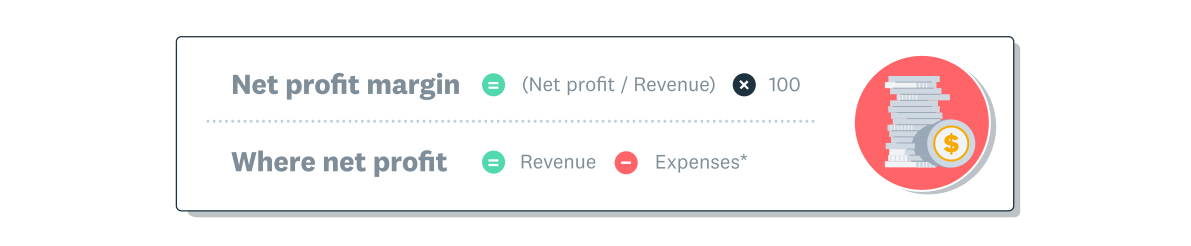
*Net profit can be quoted before or after taxes. If quoting after-tax net profit then you need to also subtract taxes.
This metric gives you a clearer picture of how well your core business operations perform. It strips out the effects of taxes and interest, so you can focus on what you can directly control.
Net profit margin
Net profit margin measures the percentage of revenue remaining after all expenses. This includes COGS, operating costs, interest, and taxes. It's the bottom line of your profit margins.
Net profit is what the business gets to keep. It's typically reinvested in growth or distributed to owners. Businesses may report net profit before or after taxes; the formulas below use pre-tax figures.
How to calculate profitability
To calculate profitability, you divide a profit figure by your total revenue and multiply by 100. The profit figure you use depends on which margin you're calculating.
1. Calculate gross profit margin
Gross profit margin tells you what percentage of revenue remains after direct production costs. Here's how to calculate it:
- Find your total revenue for the period.
- Subtract your cost of goods sold (COGS) from revenue. The result is your gross profit.
- Divide gross profit by total revenue.
- Multiply by 100 to get a percentage.
The formula is: (Revenue - COGS) / Revenue × 100 = Gross profit margin %
You can also use Xero's gross margin calculator to get your result instantly.
2. Calculate net profit margin
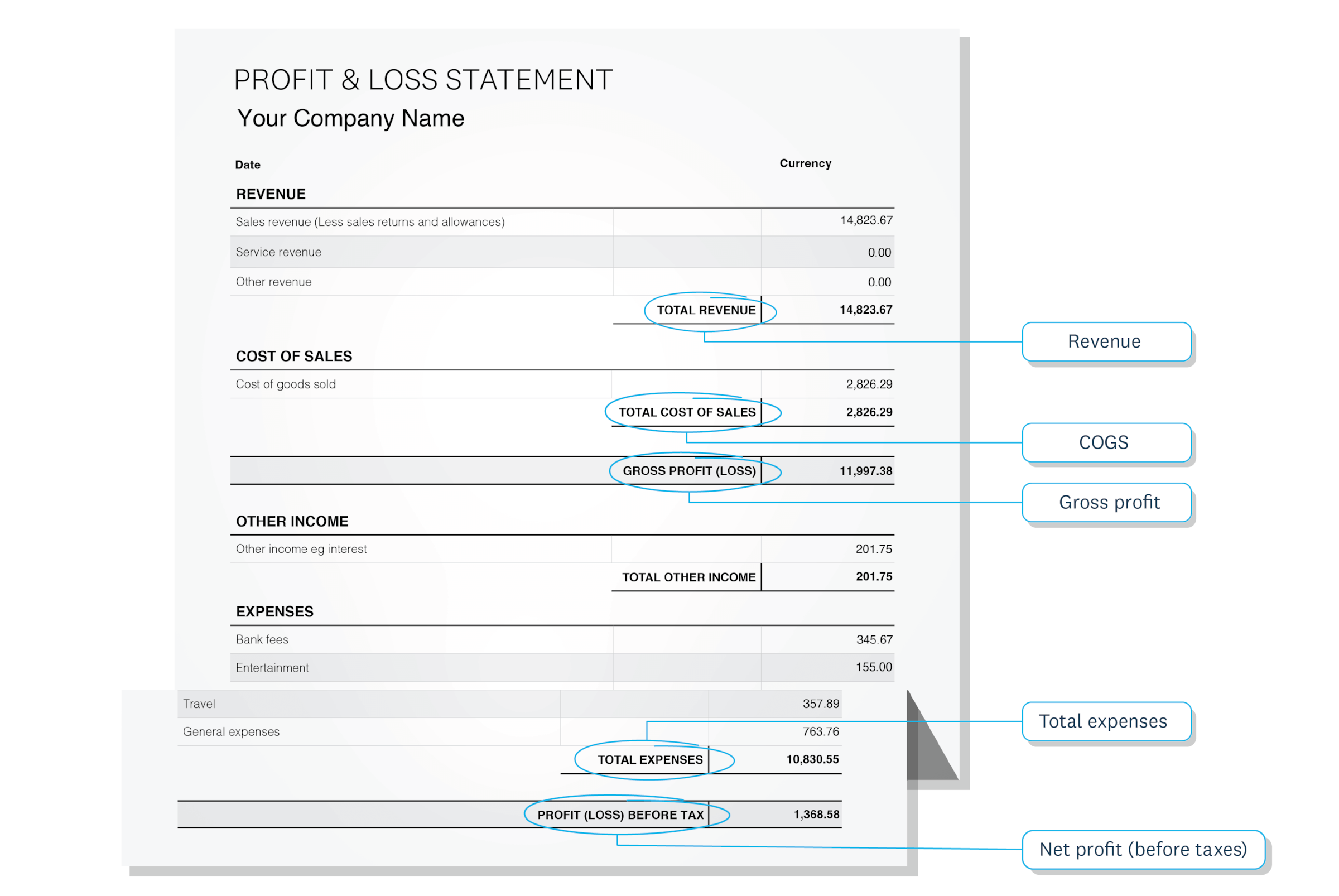
Net profit margin shows what percentage of revenue is left after all costs. Follow these steps:
- Find your total revenue for the period.
- Subtract all business expenses from revenue, including COGS, operating costs, interest, and taxes. The result is your net profit.
- Divide net profit by total revenue.
- Multiply by 100 to get a percentage.
The formula is: (Revenue - All expenses) / Revenue × 100 = Net profit margin %
Try Xero's net profit margin calculator for a quick result.
3. Work through an example
Here's a worked example to show how these calculations come together. Imagine a small business with the following figures for one quarter:
- Total revenue: RM100,000
- Cost of goods sold: RM60,000
- Operating expenses: RM20,000
Gross profit = RM100,000 - RM60,000 = RM40,000
Gross profit margin = RM40,000 / RM100,000 × 100 = 40%
Net profit = RM100,000 - RM60,000 - RM20,000 = RM20,000
Net profit margin = RM20,000 / RM100,000 × 100 = 20%
In this example, the business keeps 40 cents of every ringgit after direct costs, and 20 cents after all expenses. These figures give you a clear baseline to track over time.
Other ways to measure profitability
Profit margins aren't the only way to assess how well your business is performing financially. These additional metrics can give you a fuller picture of your profitability.
Return on assets (ROA)
Return on assets measures how effectively your business uses its assets to generate profit. You calculate it by dividing net profit by total assets and multiplying by 100.
The formula is: Net profit / Total assets × 100 = ROA %
A higher ROA means you're getting more profit from the resources you own. This metric is particularly useful if your business holds significant equipment, property, or inventory.
Return on investment (ROI)
Return on investment measures the profit you've earned relative to the money you've invested. You calculate it by dividing net profit from the investment by the cost of the investment, then multiplying by 100.
The formula is: (Gain from investment - Cost of investment) / Cost of investment × 100 = ROI %
ROI helps you evaluate whether specific spending decisions are paying off. You can use it to compare the returns on different investments, such as marketing campaigns or new equipment.
Break-even analysis
A break-even analysis identifies the revenue level needed to cover all your costs. Your break-even point is where total revenue equals total expenses.
To find it, divide your fixed costs by your contribution margin (selling price per unit minus variable cost per unit). Knowing your break-even point helps you set realistic sales targets and pricing strategies.
How to track profitability with software
Accounting software can calculate your profit margins automatically, saving you from manual spreadsheets and formulas. It pulls your revenue and expense data together in one place so you can see your profitability at a glance.
With Xero, you can generate a profit and loss statement for any period. The analytics dashboard gives you visual reports that track trends in your revenue, expenses, and margins over time.
Automated tracking means you're always working with up-to-date numbers. You can check your profitability whenever you need to and act on what you find.
Why it's important to keep measuring profitability
Profitability isn't a set-and-forget metric. Your margins can shift regularly due to changes in supplier costs, energy prices, rent, exchange rates, and market competition.
Regular measurement helps you catch problems early. If your gross margin starts dropping, investigate whether costs have risen. You can then adjust pricing before the impact hits your bottom line.
Tracking profitability over time also helps you spot seasonal patterns and long-term trends. This gives you the confidence to make proactive decisions rather than reacting to surprises.
How to improve profitability
Improving profitability comes down to either increasing your revenue, reducing your costs, or both. Here are practical steps you can take.
- Review your pricing regularly. Make sure your prices reflect your current costs and the value you deliver.
- Reduce your cost of goods sold. Negotiate better terms with suppliers, buy in bulk where it makes sense, or find more cost-effective alternatives.
- Cut unnecessary overhead. Review recurring expenses like subscriptions, office space, and services you no longer use.
- Improve operational efficiency. Automate repetitive tasks, streamline workflows, and reduce time spent on manual admin.
- Focus on your most profitable products or services. Identify which offerings generate the highest margins and prioritise them.
- Monitor your cash flow closely. Strong profitability on paper means little if cash isn't flowing into your business on time.
For more detailed strategies, read this guide on how to increase your profits.
Track your profitability with Xero
Measuring profitability doesn't have to be complicated. With the right tools, you can track your margins in real time and make confident financial decisions for your business.
Xero's accounting software brings your revenue, expenses, and reporting together in one place. You can generate profit and loss statements and monitor trends with visual dashboards. To see how Xero can help you stay on top of your profitability, get one month free.
FAQs on measuring profitability
Here are some frequently asked questions about measuring profitability.
What is a good profit margin for a small business?
A good profit margin varies by industry. You can check industry benchmarks through resources like the Department of Statistics Malaysia to set realistic targets for your sector.
How often should you measure profitability?
You should review your profitability at least monthly. More frequent tracking, such as weekly, helps you catch changes early and respond before they become bigger problems.
What is the difference between gross and net profit margin?
Gross profit margin only subtracts direct production costs (COGS) from revenue. Net profit margin subtracts all costs, including operating expenses, interest, and taxes. Net profit margin gives you the fuller picture of your overall profitability.
Can you be profitable but still run out of cash?
Yes. Profitability measures income minus expenses over a period, but cash flow depends on when money actually moves in and out of your account. A profitable business can still face cash shortages if customers pay late or large expenses come due before revenue arrives.
What is operating profit margin?
Operating profit margin measures the percentage of revenue left after subtracting both COGS and day-to-day operating expenses. It shows how efficiently your core business runs, excluding the effects of taxes and interest.
Disclaimer
Xero does not provide accounting, tax, business or legal advice. This guide has been provided for information purposes only. You should consult your own professional advisors for advice directly relating to your business or before taking action in relation to any of the content provided.
Start using Xero for free
Access Xero features for 30 days, then decide which plan best suits your business.