Canada Small Business Insights
This analysis focuses on core performance metrics of sales growth, late payments and time to be paid.

Four months of rising sales offers hope to small businesses
Published: 29 October 2026
The latest Xero Small Business Insights (XSBI) data shows Canadian small businesses had one of their better quarters in recent times and have recorded four consecutive months of sales growth. It's been a difficult 18 months, so even small improvements are welcome. Both payment times metrics were little changed in the quarter.
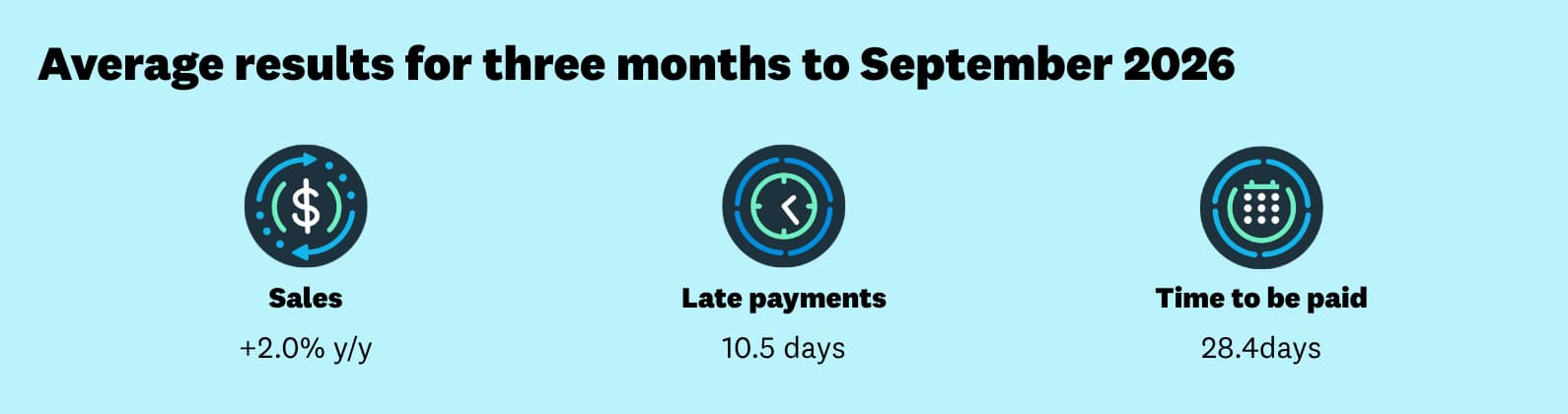
Small business sales rose 2.0% year-over-year (y/y) in the September quarter, following a 0.4% y/y rise in the June quarter. Small business sales have now recorded four consecutive months of growth - the last time this happened was between April and July 2025. The monthly results were a 3.0% y/y rise in July, a 2.5% y/y rise in August and a 0.5% y/y rise in September. In isolation these sales results are tepid at best and well below the historical average of 4.2% y/y sales growth. However, it comes after many months where sales were actually declining and so indicates some signs of improvement in performance and offers a glimmer of hope for Canadian small business owners.
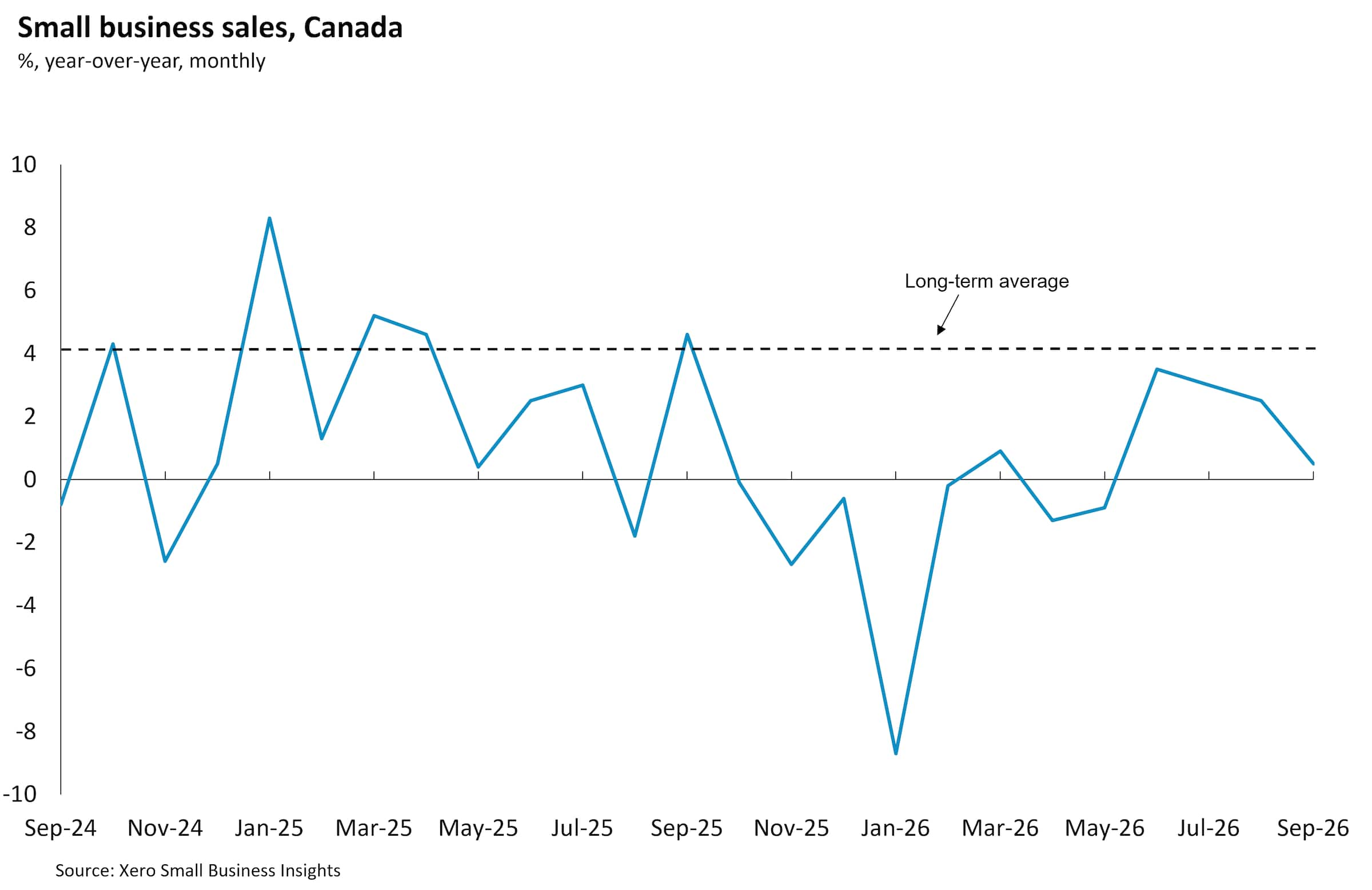
It's been a difficult 18 months, so even small improvements are welcome
XSBI Canada July 2026 - Sept 2026 data
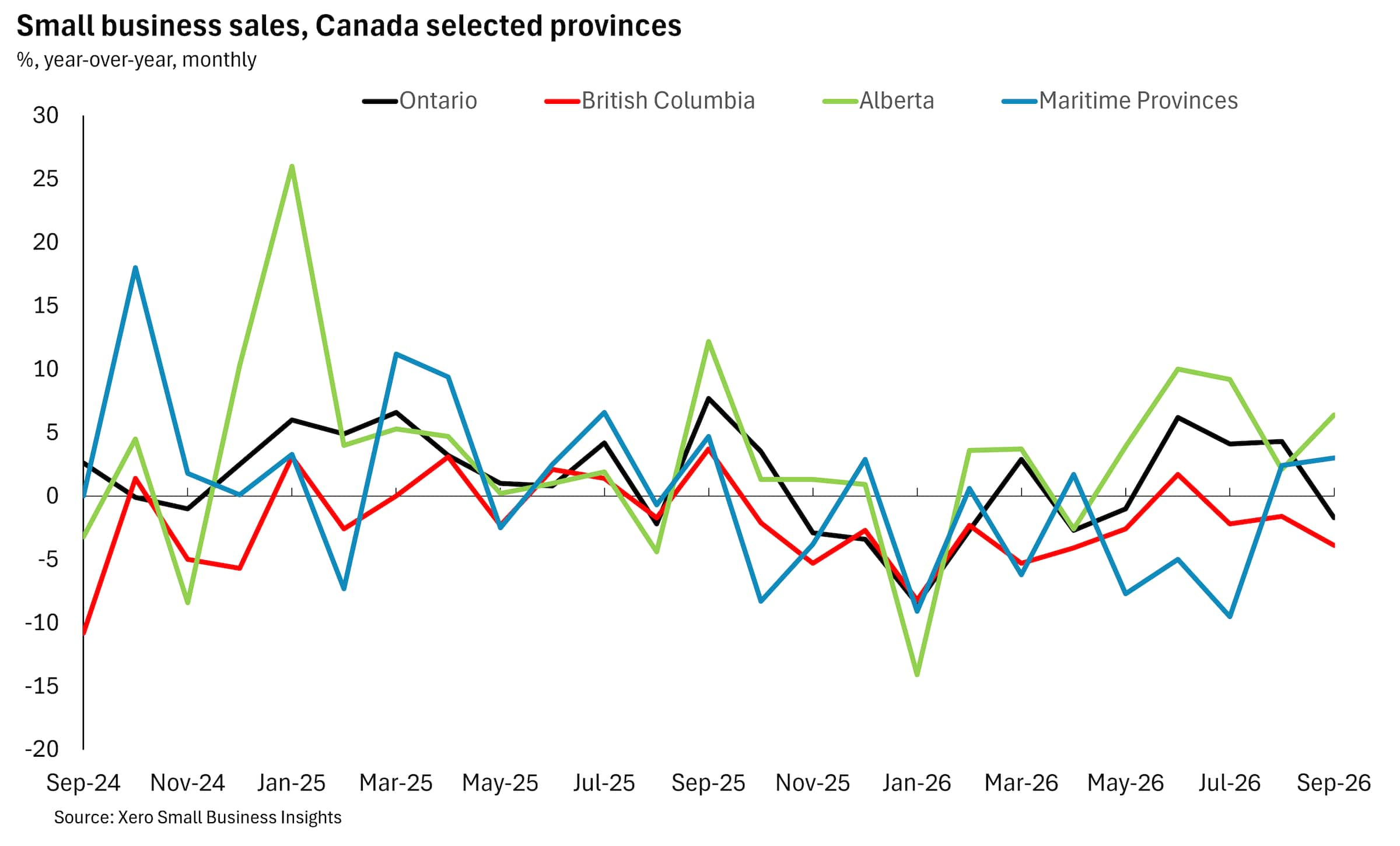
Breaking down the results into provincial levels, data shows oil-rich Alberta is benefitting the most from higher global prices, with sales up 5.9% y/y. Ontario improved its sales performance to 2.2% y/y growth, after a 0.8% y/y rise in the June quarter, and could have been even higher if not for a 1.7% y/y decline in the month of September. The Maritime Provinces (-1.4% y/y) had lower sales than a year ago over the quarter, but this was largely due to a 9.5% y/y fall in July. Sales in British Columbia were 2.6% lower than a year ago in the September quarter, with every month recording lower sales than the same month a year ago.
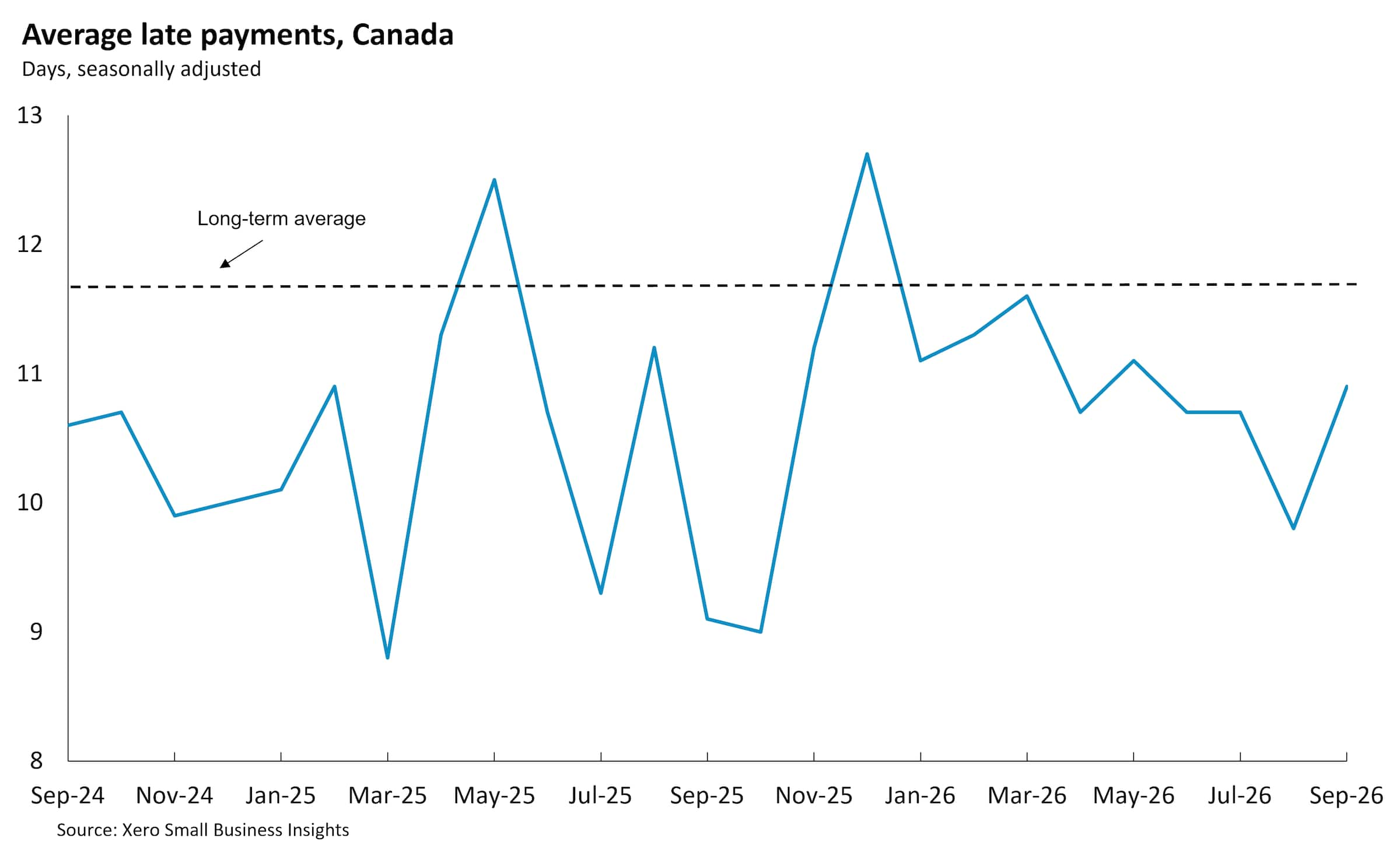
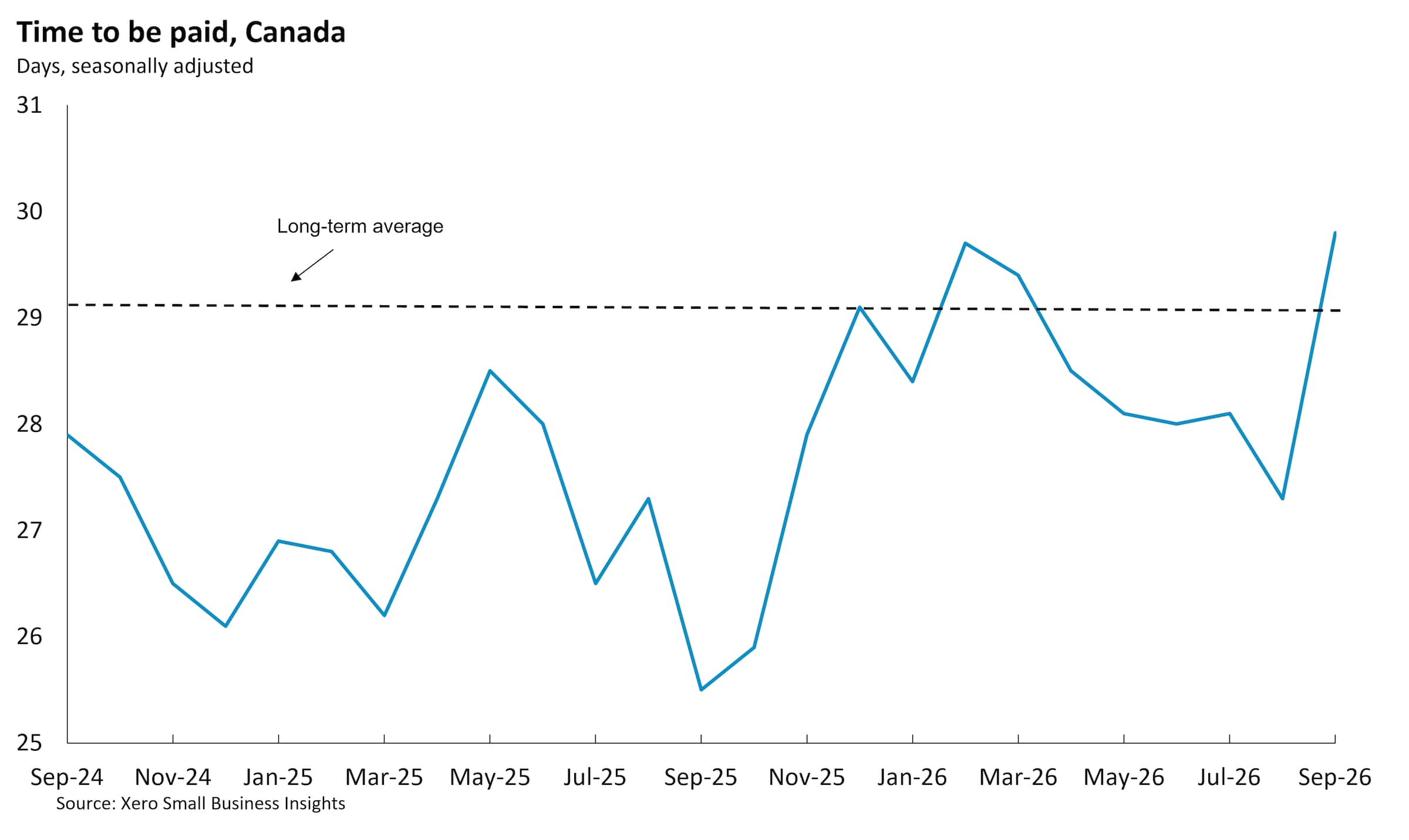
Small business payment times were little changed in the September quarter. Small businesses waited 28.4 days to be paid in the latest quarter, similar to the 28.2 days in the June quarter. This was largely due to the 29.8 days result for the month of September. Small businesses were paid, on average, 10.5 days late which was similar to the June quarter result (10.8 days).
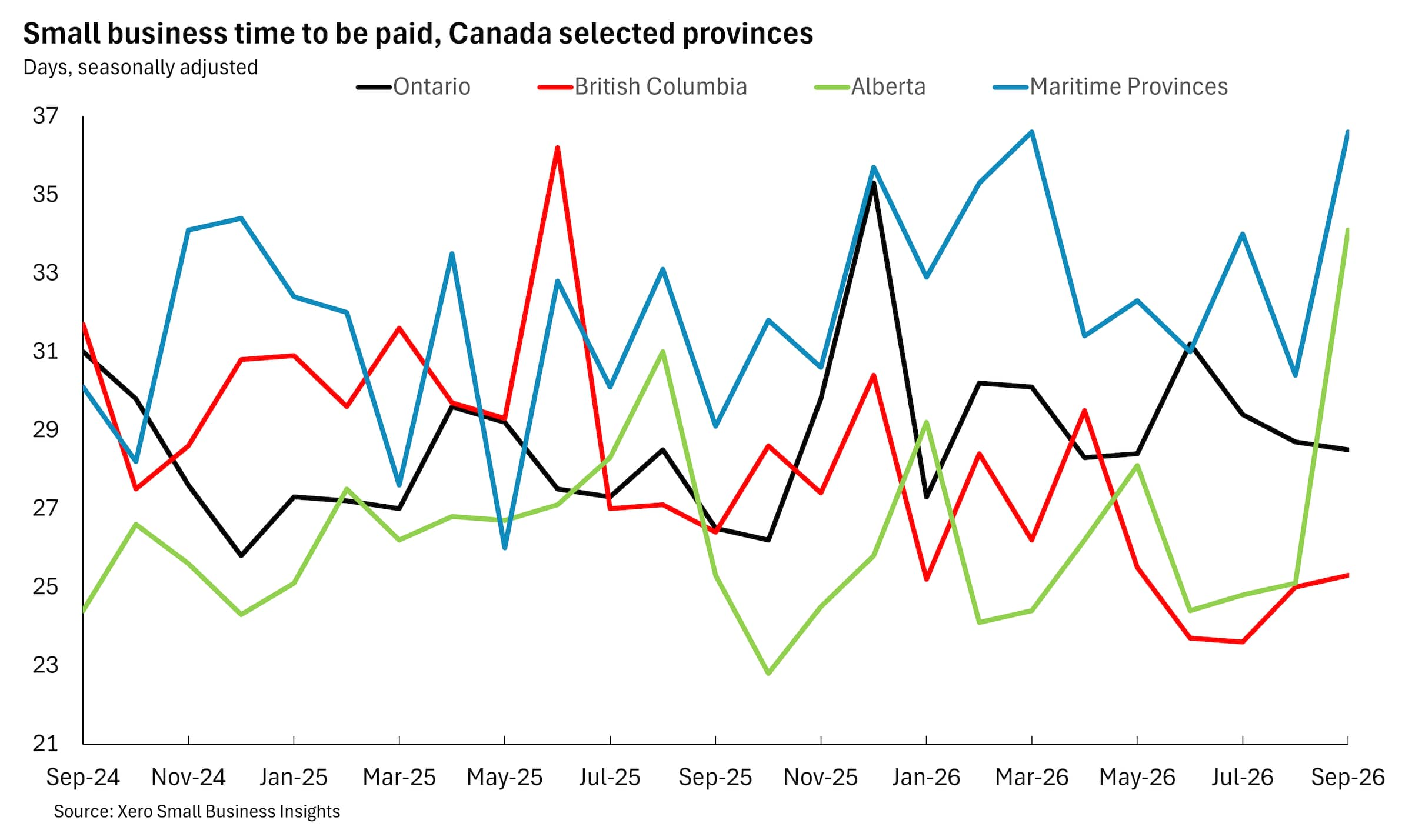
British Columbia remains the fastest place for small businesses to be paid (24.6 days), followed by Alberta (28.0 days), Ontario (28.9 days) and the Maritime Provinces (33.7 days). The Alberta result was made worse by a large rise in payment times in the month of September, to 34.1 days - the longest payment time since August 2023. This may be revised as more data becomes available in future months.
Overall, the latest XSBI results show that there was an improvement in sales performance in the September quarter, although sales growth is still well below the long-term average. The results also highlight how oil-rich Alberta is helping to protect the rest of Canada from the negative impact of the Middle East conflict and a re-escalation in trade tensions with the United States.
Looking ahead, many small businesses are likely to continue to face difficult trading conditions amid ongoing trade tensions with the US and higher-than-normal fuel prices.
The negative impact on economic growth from US trade tensions is likely to continue to dominate the performance of many small businesses. The disproportionately negative impact this is having on small businesses that import or export was highlighted in the September Business Barometer from the Canadian Federation of Independent Businesses (CFIB). They compared the confidence levels of importers, exporters and those not active internationally in the month of September over the past three years. In September 2024 there was no statistical difference in the 12-month confidence score between these three groups. In September 2026, after almost two years of elevated trade tensions with the US, the differences between the three groups was stark. Canadian exporters reported a 12-month confidence score of 38.6 points, compared to 43.5 points for importers and 52.2 points for non-traders. The obvious response for Canadian small businesses that trade with the US is to try to find new markets for exports or sources for imports. However, this takes time and is not a costless exercise as new relationships need to be established.
Meanwhile, the ongoing conflict in the Middle East and the resulting elevated gas prices is putting upward pressure on prices and adding to inflation pressures. Soft economic growth has, so far, made it hard for businesses to pass on cost increases. However, the longer the conflict goes on the greater the risk that these costs will need to be passed on to customers in the form of higher prices.
So far in 2026 the Bank of Canada has left the policy interest rate unchanged, at 2.25%, as it grapples with the competing forces of downside growth risks from US trade tensions and upside inflation risks from the conflict in the Middle East. Following its September meeting the Bank noted that "the upside risks to inflation have increased, while new tariffs make growth prospects more uncertain." At the time of finalising this summary, a few days ahead of the October 28 Bank of Canada meeting, markets were expecting the Bank of Canada would join many of its counterparts in other countries and lift the policy rate at this meeting due to increased concerns around gas-price induced inflation.
For more information on the XSBI metrics, see our methodology page.

Disclaimer
This report was prepared using Xero Small Business Insights data and publicly available data for the purpose of informing and developing policies to support small businesses.
This report includes and is in parts based on assumptions or estimates. It contains general information only and should not be taken as taxation, financial, investment or legal advice. Xero recommends that readers always obtain specific and detailed professional advice about any business decision.
The insights in this report were created from the data that was available as at the date it was extracted. Data used was anonymised and aggregated to ensure individual businesses can not be identified.
Find out more about XSBI
If you have any questions about Xero Small Business Insights, reach out to us.